














Λήψη της μελέτης περίπτωσης (PDF)
An international maritime port authority hardened approximately 2 miles (3.2 km) of multi-terminal fence line with the IRONCLAD Fence Alarm System: ten zones on five LPU-402 processors, tuned zone by zone against crane and container-handling vibration, with hardware rated for the coastal environment it lives in. A security integrator completed the installation in a few days with terminal operations running throughout. Customer identity withheld at the client’s request.
Τι είδους τοποθεσία προστατευόταν;
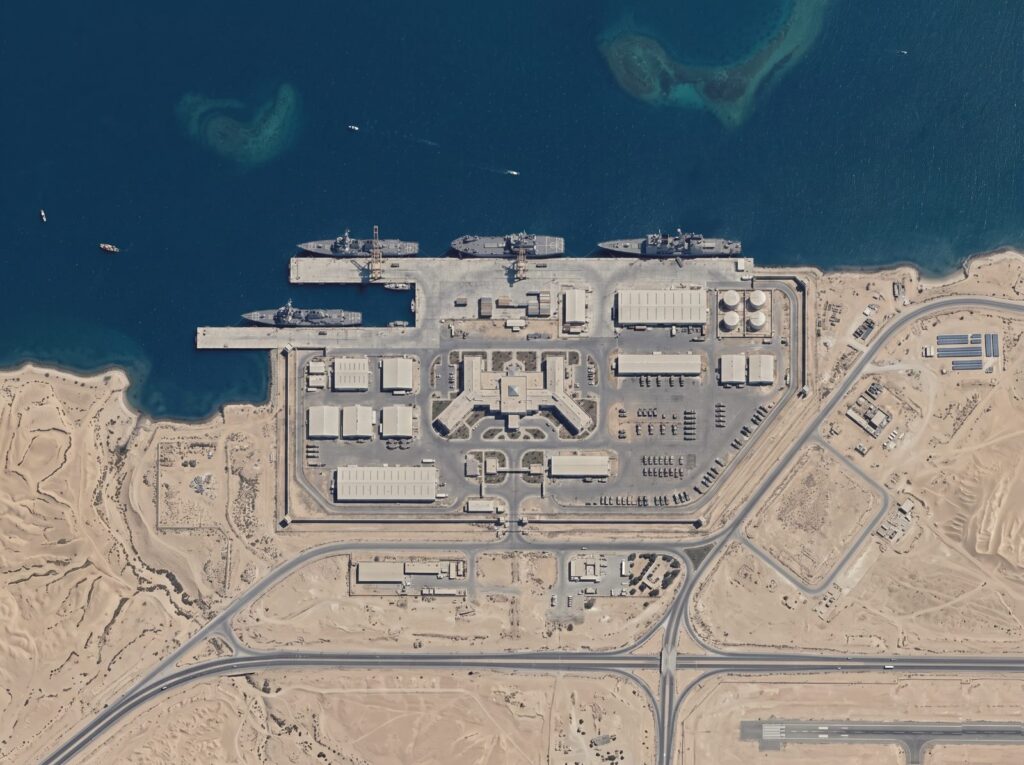
The customer is an international maritime port authority managing a multi-terminal facility that handles container ships, bulk cargo and cruise liners. Ports of this kind are critical national infrastructure and operate under the ISPS Code (International Ship and Port Facility Security), which makes controlled access and intrusion detection a condition of doing business, not an option.
The perimeter runs for roughly 2 miles, bordering industrial zones on one side and open coast on the other. Inside it sits exactly what smugglers and thieves want: containers staged in predictable places, high-value cargo in transit, and constant vehicle movement to hide inside.
What was the problem at the fence line?
The port faced two problems that killed its previous approach.
The first was the environment. Salt spray and constant humidity are brutal on outdoor electronics, and standard sensors degrade quickly when they live a few hundred meters from open water.
The second was noise. A working container terminal never sits still: gantry cranes, straddle carriers and container movers put steady vibration into the ground and the fence around them. The port’s legacy fence alarms could not separate that background from a real intrusion and triggered constantly, which in practice meant operators stopped treating them as alarms at all.
Why not cameras or beam sensors?
Camera analytics struggle in exactly the conditions a port serves up: fog, spray, glare off water, and a scene that is legitimately busy around the clock. Beam-based sensors such as microwave links and active infrared bring documented constraints of their own: they need flat ground, precise alignment and a clear line of sight, they lose performance in fog, rain and dust, and they nuisance-alarm on birds and small animals. Neither puts detection on the fence fabric itself, which is where cutting and climbing actually happen.
What was installed?
The port installed the Σύστημα συναγερμού φράχτη IRONCLAD, RBtec’s vibration sensor cable for chain-link and similar fencing. The cable mounts to the fence fabric, and each processor reads the vibration signatures of cutting and climbing, then raises an alarm for the zone where the event is happening.
The deployment covers approximately 2 miles of fence in ten zones of roughly 1,000 ft (305 m) each, running on five LPU-402 processors, two zones per unit. A single cable run per fence line covers fences up to 10 ft (3 m).
The coastal environment was answered with ratings rather than hope. The sensor cable is rated for continuous outdoor coastal exposure, and the processors sit in NEMA 4X (IP66) enclosures, a rating specified for corrosive atmospheres and driven water. The sensing element on the fence is a sealed cable with no exposed electronics between it and the processor.
How was the deployment tuned for a working port?
Per-zone sensitivity is the heart of it. Each of the ten zones carries its own settings, so the fence beside the crane rails is tuned against heavy ambient vibration while a quiet stretch along the outer boundary runs more sensitive. Commissioning walked the tuning through the port’s real operating day, with the terminals working, so the baseline the system learned is the baseline it lives with.
Πώς αναπτύχθηκε το σύστημα;
A security integrator carried out the installation in a few days. The work is confined to the fence line and the processor enclosures: cable mounted to the fabric, terminated at each LPU-402, outputs wired onward. No trenching, no shutdowns, and no interruption to vessel or gate operations.
Με τι συνδέεται το σύστημα;
Zone alarms feed the port’s security operations center, where operators see which of the ten zones is alarming and dispatch to that stretch of fence. The processors hand off alarms through standard outputs, which is what makes them platform-agnostic: they drop into the monitoring systems a port already runs without replacing any of them.
Τι άλλαξε μετά την εγκατάσταση;
The design intent is that a cut or climb attempt anywhere on the 2 miles raises a zone alarm the operators can act on, instead of a nonstop stream of nuisance triggers they had learned to ignore. RBtec has not published measured before and after alarm or incident counts for this port.
For the port’s ISPS security plan, the fence line is now a documented detection layer: zoned, testable, and specified for the environment it operates in. And because the configuration is standard hardware in a repeating pattern, extending it to a new terminal or a fence extension is arithmetic, not a redesign: measure the fence, divide by zone length, add processors.
A port is the hardest tuning environment we work in short of an airport. A crane lifting a container puts steady vibration into everything around it, so each zone gets its own settings: the fence by the crane rails is not tuned like the fence by the truck gate. That is why the system ships with per-zone sensitivity rather than one global knob.
Η ομάδα μηχανικών της RBtec
What was deployed
| System | Σύστημα συναγερμού φράχτη IRONCLAD |
|---|---|
| Customer | International maritime port authority, multi-terminal facility |
| Perimeter covered | Approximately 2 miles (3.2 km) of fence |
| Ζώνες | Ten zones of approximately 1,000 ft (305 m) |
| Processors | Five LPU-402 units, two zones each |
| Fence coverage | Single cable run per fence line, fences up to 10 ft (3 m) |
| Περιβάλλον | Cable rated for continuous outdoor coastal exposure, processors in NEMA 4X (IP66) enclosures |
| Noise handling | Per-zone sensitivity tuning against crane and container-handling vibration |
| Ολοκλήρωση | Zone alarms into the port’s security operations center |
| Εγκατάσταση | Security integrator, a few days, terminal operations uninterrupted |
Λήψη της μελέτης περίπτωσης (PDF)
What is the next step?
For a port or terminal operator, the design follows from three things: total fence length, where the noise lives (crane rails, truck gates, rail sidings), and what the security operations center already runs. Send RBtec a perimeter drawing with the noisy areas marked and we will return a zone plan, a processor count and an integration path.
RBtec Perimeter Security Systems has built outdoor perimeter intrusion detection since 1986, with more than 5,000 systems installed in 57 countries.
 IRONCLAD sensor cable across ten zones of about 1,000 ft on five LPU-402 processors.
 Operators see which zone alarmed and dispatch to that stretch of fence.