













ShortPDS Alarmed Carrier and Protective Distribution System (PDS)

The Short Range Alarmed Carrier PDS is a physical cyber security solution that adds intrusion detection to traditional conduits, pipes, raceways, and cable trays. It supports the growing demand for secure and classified network connections while enhancing security, reducing costs, and providing real-time situational awareness. The system enables continuous monitoring and protection of critical network infrastructure.

ShortPDS is TAA and NDAA compliant for U.S. government and defense deployments. Protecting fiber infrastructure or longer distances? See the FiberPDS fiber optic alarmed carrier, or explore the full alarmed carrier PDS family.

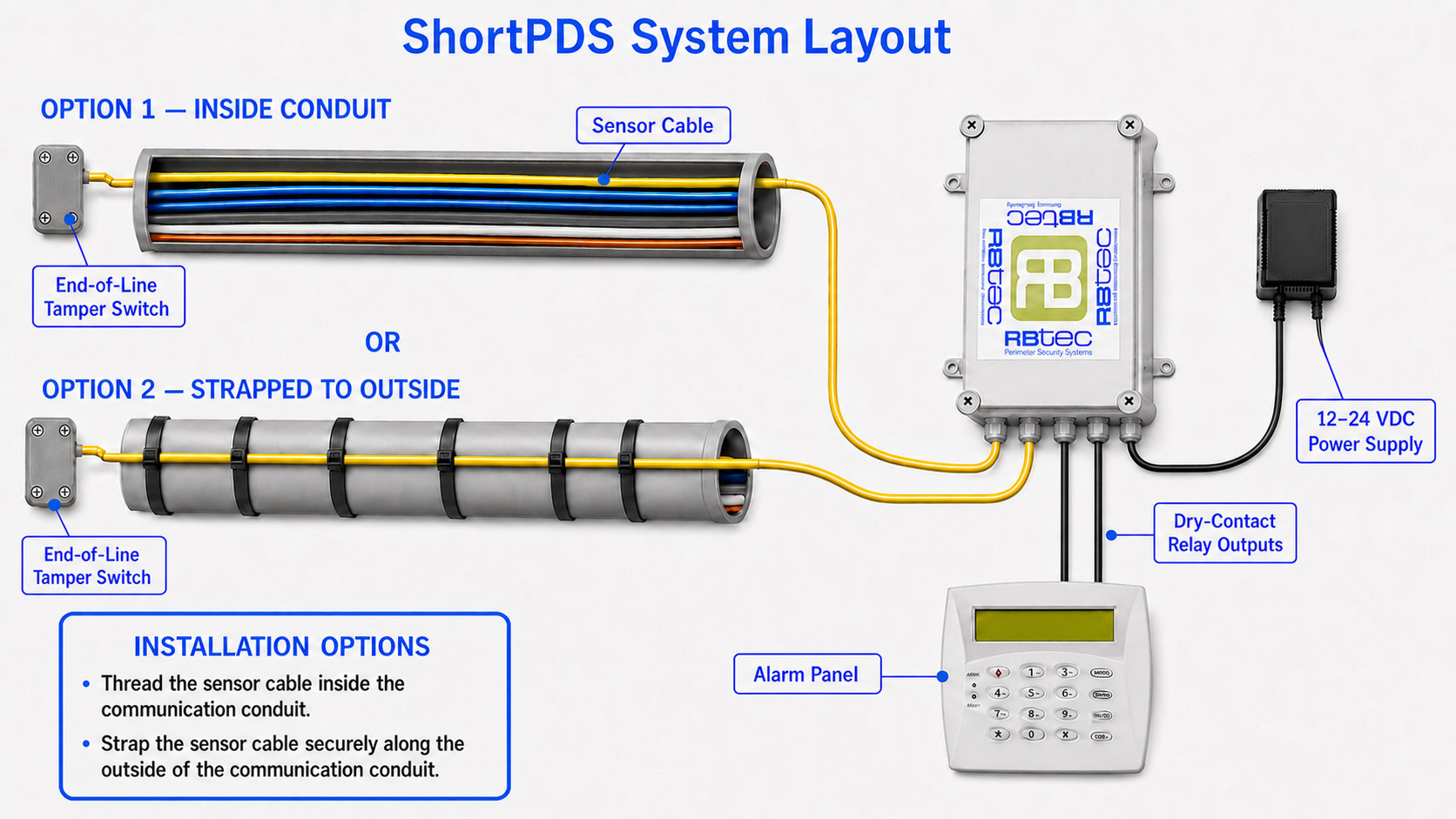
ShortPDS sensor cable running along a protected conduit and cable tray, connected to the LPU analyzer and alarm panel
ChatGPT Image Jul 22, 2026, 07 05 17 PM

PDS Use & Deployment

  1. Point-to-Point Connections
    Short-range protection up to 300 m / 1000 ft (building-to-building, room-to-room, trunk cables), or up to 1200 m / 4000 ft from a single processor across four conduits or pipes.
  2. Encryption Alternative or Complement
    Suitable for short distances and network gaps, operating instead of or alongside encryption.
  3. Automated Continuous Monitoring
    Replaces daily manual inspections with 24/7 monitoring to improve security and reduce operational costs.
  4. Reduced Infrastructure Requirements
    Can eliminate the need for EMT or rigid metallic conduits when used with armored cable solutions, lowering material and installation costs.
  5.  Government & High-Security Use
    Increasingly deployed by government agencies to reduce encryption complexity, maintenance, and overall system costs.

System Integration & Protection


  • Universal System Compatibility
    Integrates with any alarm system, CCTV, DVR, NVR, or SCADA platform.

  • Broad Infrastructure Coverage
    Designed to protect most communication infrastructures, including metal or plastic conduits, pipes, cable trays, and raceways.

  • Advanced Tamper Detection
    Detects drilling, tapping, lifting, and other intrusion attempts by sensing vibration patterns on protected cables.

  • Multi-Zone Monitoring
    Each processor supports up to 4 zones with independent relay outputs per zone.

  • High Immunity to False Alarms
    Three-layer filtering using vibration frequency analysis, automatic live calibration, and 500 adjustable sensitivity levels.
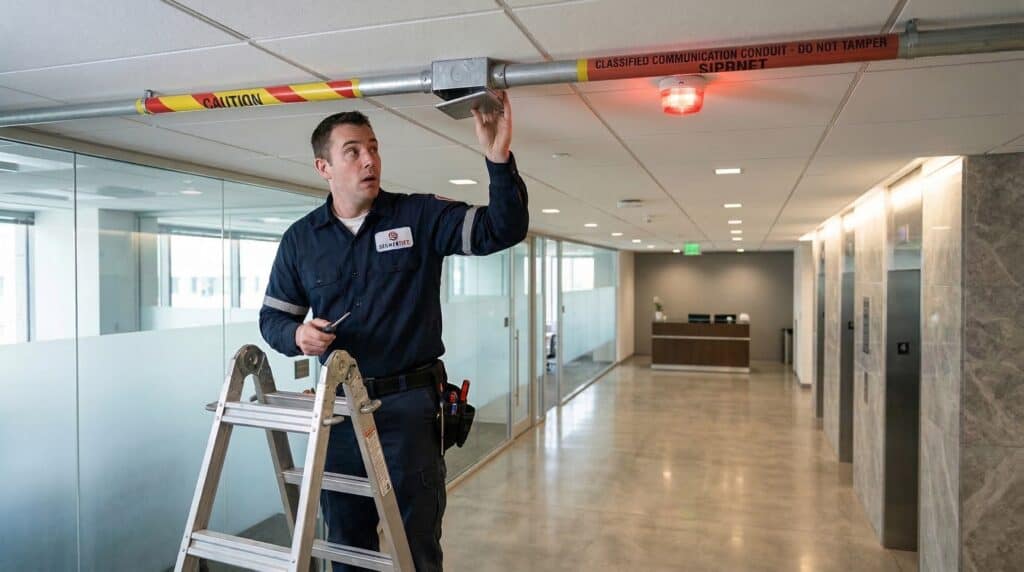
ShortPDS alarmed carrier sensor cable protecting network conduit infrastructure

Innovative Solutions for Every Need

Purpose built perimeter detection for the industries where a breach costs the most.
Explore how RBtec fits yours:
ShortPDS Alarmed Carrier PDS: Frequently Asked Questions

An alarmed carrier Protective Distribution System (PDS) turns ordinary conduits, pipes, raceways, and cable trays into monitored infrastructure. A sensor cable detects the vibration signatures of drilling, tapping, cutting, or lifting on lines carrying sensitive or classified data, providing continuous electronic monitoring instead of the daily visual inspections required for traditional hardened-carrier PDS.

ShortPDS is RBtec’s short-range copper alarmed carrier PDS. One standalone processor monitors up to four conduits or cable trays, each up to 300 m (1,000 ft), with no software, server, or calibration required. It is designed for CNSSI 7003 alarmed carrier deployments and is TAA and NDAA compliant.

Yes. Alarmed carrier PDS is recognized under CNSSI 7003 as a method for protecting unencrypted classified transmission lines. ShortPDS provides the continuous monitoring layer for point-to-point links such as building-to-building trunks, room-to-room runs, and network gaps, as an alternative or complement to encryption.

It senses vibration patterns on the protected carrier and detects drilling, tapping, lifting, cutting, and similar tampering attempts. Three layers of false-alarm filtering (vibration frequency analysis, automatic live calibration, and 500 adjustable sensitivity levels) keep nuisance alarms to a minimum.

Metal or plastic conduit, EMT, pipes, cable trays, and raceways. When deployed with armored cable, ShortPDS can eliminate the need for rigid metallic conduit entirely, reducing material and installation costs while maintaining a compliant protected path.

Each zone has an independent dry-contact relay output (eight relays total, plus tamper and power-loss relays), so it connects to any alarm panel, CCTV/VMS, DVR/NVR, or SCADA platform. Configuration is via USB-C, with optional RS485 or IP connectivity.

No. It operates as a fully standalone system with continuous self-monitoring: there is no server, no software license, and no periodic calibration. Sensitivity is set per zone with 22 onboard levels or 500 fine-grained levels via the optional software tool.

Yes. ShortPDS is TAA and NDAA compliant, making it eligible for U.S. federal government projects, military installations, and critical-infrastructure sites that require compliant security equipment.

Visit the full ShortPDS frequently asked questions page for detailed answers about detection, installation, integration and compliance.

Five Reasons Why Cameras and Manual Inspections Are Not Enough

No Eyes Inside the Conduit

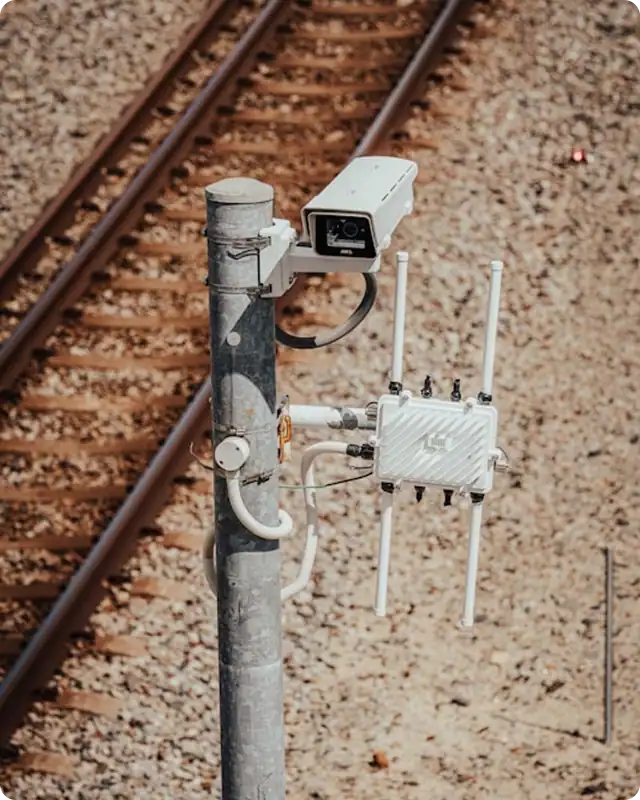
Cameras watch rooms and corridors - not the inside of pipes, cable trays, and risers. Drilling or tapping a protected line can look like routine maintenance on video.

Detection Before the Breach

Video gives you evidence after the fact. An alarmed carrier senses the vibration signature of tampering in real time, raising the alarm before the line is compromised.

Manual Inspections Do Not Scale

Traditional hardened-carrier PDS depends on scheduled visual walk-throughs. ShortPDS replaces daily inspections with continuous 24/7/365 electronic monitoring.

Coverage Gaps Between Buildings

Trunk lines run through ceilings, risers, and underground conduit between buildings - spaces cameras were never designed to cover.

Watching Is Not a PDS

For classified and sensitive networks, CNSSI 7003 calls for a protected, monitored pathway. Video surveillance alone does not make a cable run an alarmed carrier PDS.
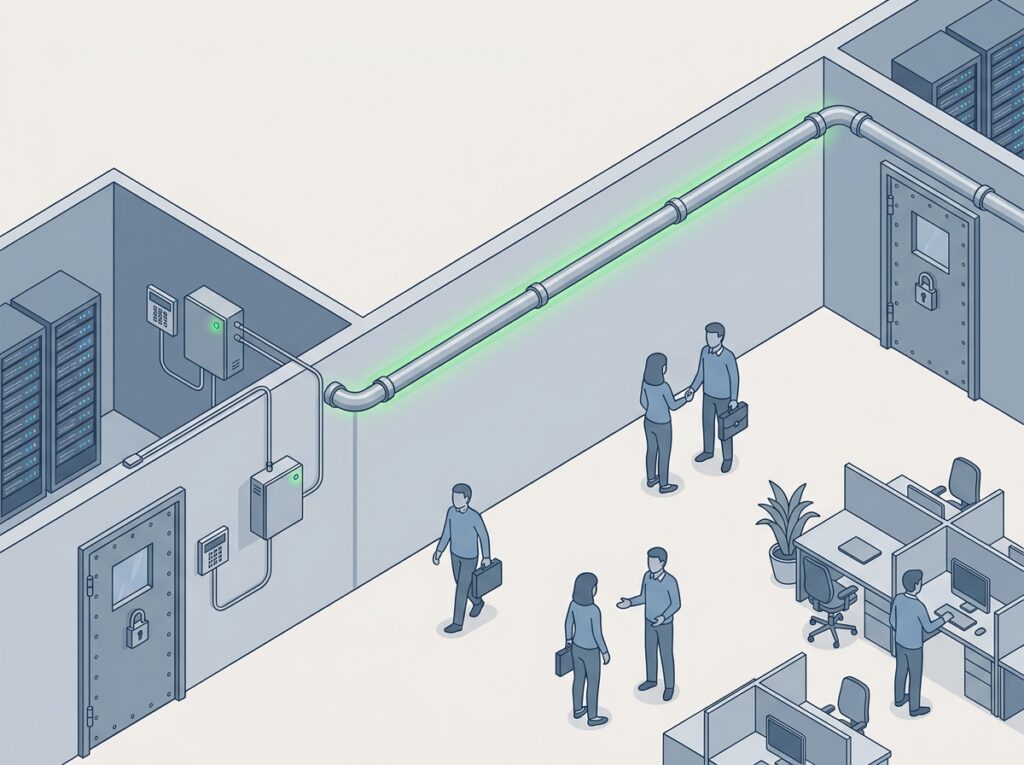
ShortPDS alarmed carrier PDS concept: monitored conduit with sensor cable crossing a public office area between two locked server rooms

ShortPDS Kit Contents & Coverage

  1. Pre-cut sensor cable
    Available in 250 ft (75 m), 500 ft (152 m), and 1,000 ft (305 m) spools.
  2. Up to 4 zones per processor
    Each LPU processor (analyzer) monitors up to four zones (spools).
  3. 4,000 ft / 1,200 m total coverage
    Four zones of up to 1,000 ft (300 m) of sensor cable from a single processor.
  4. Complete kit
    Every kit includes an LPU processor in a weatherproof enclosure and sensor cable in your chosen length.
  5. Stackable for larger sites
    Combine as many kits as needed to protect larger infrastructure.
RBtec’s Partners Worldwide
RBtec perimeter security system protecting a fenced facility
RBtec fence-mounted detection technology close-up
Seismo Ground Sensor System Demonstration
WallAlert Wall Intrusion Detection – Live Hammer Attack Demo
MicAlert Aluminum Fence Detection Demo
Vidalert Alarm Management Software for the RaySense
RaySense TPI Pipeline Fiber Optic Sensor Cable Digging Detection and Cable Theft Prevention
RaySense Buried Cable Sensor Intrusion Detection
RBtec IRONCLAD Demonstration – Perimeter Protection System for Fences – Perimeter Security System
Operating Power Requirements
  • 12 – 24VDC 300mA @ 12VDC
Lightning Protection
  • 2 Layer Surge Protection
  • Gas discharge devices are on all inputs/outputs and communication lines
Alarm Inputs
  • 2/4 PDS sensor cable inputs
  • 4 Intrusion and Line monitoring for accessories like magnets, contact, microwaves, and motion detectors
  • 1 Tamper switch
Zone Status & Sensitivity Levels
  • 8x Arm/Disarm via Jumper
  • Twenty-two levels of sensitivity per zone on board
  • 500 Levels of sensitivity via software
  • 1 Power Outage relay
Communication to PC
  • USB-C Input
  • Optional RS485 or IP
Alarm Outputs
  • 8x Dry contact relays with contacts rated 1A @ 12VDC
  • 1x Tamper switch relay
  • 1x Power Outage relay
Connector
  • Sensor Input – 8x Screw terminal – Pair per zone
  • Alarm Output – 8x Screw terminal – Pair per zone
Cable
  • Outer Diameter – 1/4 Inch (6mm)
  • Color: Metallic Silver
Enclosure
  • NEMA 4X, IP-66
  • 9.5 x 7.5 x 2.75” (24 x 19.5 x 7.0cm)
  • Weight: 2.2 lbs. (1Kg)
Environment
  • Operating Temperature: – 40° to 221°F (-40° to 105°C)
  • Relative Humidity up to 98% non-condensing
Compliance

Designed for CNSSI 7003 alarmed carrier PDS deployments · TAA and NDAA compliant

It is a Protective Distribution System in which an approved alarm system continuously monitors the carrier, or the space around it, for attempted penetration. With ShortPDS, a copper sensor cable is installed along the outside of the carrier or threaded through it so mechanical activity associated with drilling, cutting, lifting or other tampering can produce an alarm.

Yes. CNSSI No. 7003 identifies an alarmed carrier as one of the available Category 2 carrier methods. It requires the alarm system to detect attempted penetration, report faults, resist tampering, annunciate to a continuously staffed location and support the required security response.

ShortPDS is a component that can support such a design. Compliance and approval apply to the complete installation, not to the sensor alone. The department or agency Authorizing Official is responsible for approving, certifying and recertifying the PDS.

For an approved alarmed carrier, CNSSI No. 7003 does not require the routine visual inspection schedule listed for non-alarmed carriers. It does not eliminate all inspection, testing or operating requirements. Each alarm zone must be functionally verified at the interval required for the classification of the information carried: monthly for Confidential, weekly for Secret, and daily for Top Secret or Sensitive Compartmented Information, unless the responsible authority imposes different or additional requirements.

The approved standard operating procedure must also address alarm response, investigation, maintenance, transmission shutdown and fault reporting.

Typical applications include short runs between secure rooms, from a SCIF or other Controlled Access Area to an IT or telecommunications room, through controlled or limited-access corridors, above accessible ceilings, and between approved areas in the same facility. The route and surrounding access conditions must match the approved PDS design.

ShortPDS is designed to detect vibration patterns associated with attempts to drill, cut, lift, open or otherwise penetrate the protected conduit, pipe, raceway or cable tray. Detection performance depends on proper mechanical coupling, installation, configuration and commissioning tests on the actual carrier.

One processor can monitor up to four independent conduits or zones, each with up to 1,000 ft (300 m) of copper sensor cable. The maximum combined sensor length is 4,000 ft (1,200 m). Each zone has separate intrusion and line-monitoring outputs so the receiving system can identify which run generated the event.

The system combines vibration-frequency analysis, automatic live calibration and independently adjustable sensitivity. The processor provides 22 onboard sensitivity levels per zone and up to 500 levels through the configuration software. Final settings should be confirmed by testing representative tamper activity and normal background conditions on every zone.

No. ShortPDS operates as a standalone system and does not require a server, recurring software license or network connection for normal alarm operation. A local USB-C connection is available for detailed configuration, and optional RS-485 or IP communication may be specified when required by the project.

The four-zone processor provides eight dry-contact relays, normally used as separate intrusion and line-monitoring outputs for each zone, plus dedicated tamper and power-outage relays. Contacts are rated at 1 A at 12 VDC. The relays can connect to a standard alarm panel or to a VMS, DVR, NVR, access-control or SCADA system with compatible alarm inputs.

Yes, in many projects. The sensor can be attached along the outside of a metal or plastic conduit, pipe, raceway or tray, or threaded through a suitable carrier. However, adding a sensor does not automatically make an existing route an approved PDS. The carrier, joints, pull boxes, terminations, access controls, monitoring location and response plan must all be reviewed against the applicable requirements and approved design.

No. The ShortPDS sensor cable monitors mechanical activity on the carrier and does not connect electrically to the protected data cable. It therefore does not carry network traffic or alter the signal on the protected line.

No. CNSSI No. 7003 states that a PDS carrying unencrypted national security information is not permitted in an Uncontrolled Access Area. A National Manager-approved encryption solution is required for that portion of the route. The Authorizing Official and cognizant Certified TEMPEST Technical Authority should be involved early in the design.

FiberPDS is designed for long routes measured in kilometers or miles. A project can use ShortPDS for short in-building segments and FiberPDS for longer paths, provided the combined design and alarm response are documented and approved.

Send RBtec a floor plan or route drawing showing the origin, destination, carrier type, run length, pull boxes, accessible sections and alarm-panel location. RBtec can recommend zones, sensor lengths and system components and provide product documentation for the PDS approval package. The PDS owner remains responsible for obtaining the required project approval.

Still have questions?

Contact RBtec at +1 (301) 760-4016 with your route drawing and carrier details. Our team can help develop the ShortPDS sensing layout and bill of materials for review by your security and accreditation authorities.

Personal Information

Project Information

Protect Your Site with RBtec

RBtec delivers innovative perimeter security solutions trusted worldwide. With over 5,000 systems installed in 57 countries, our products combine reliability, cost-effectiveness, and user-friendly design for any site size or risk level.