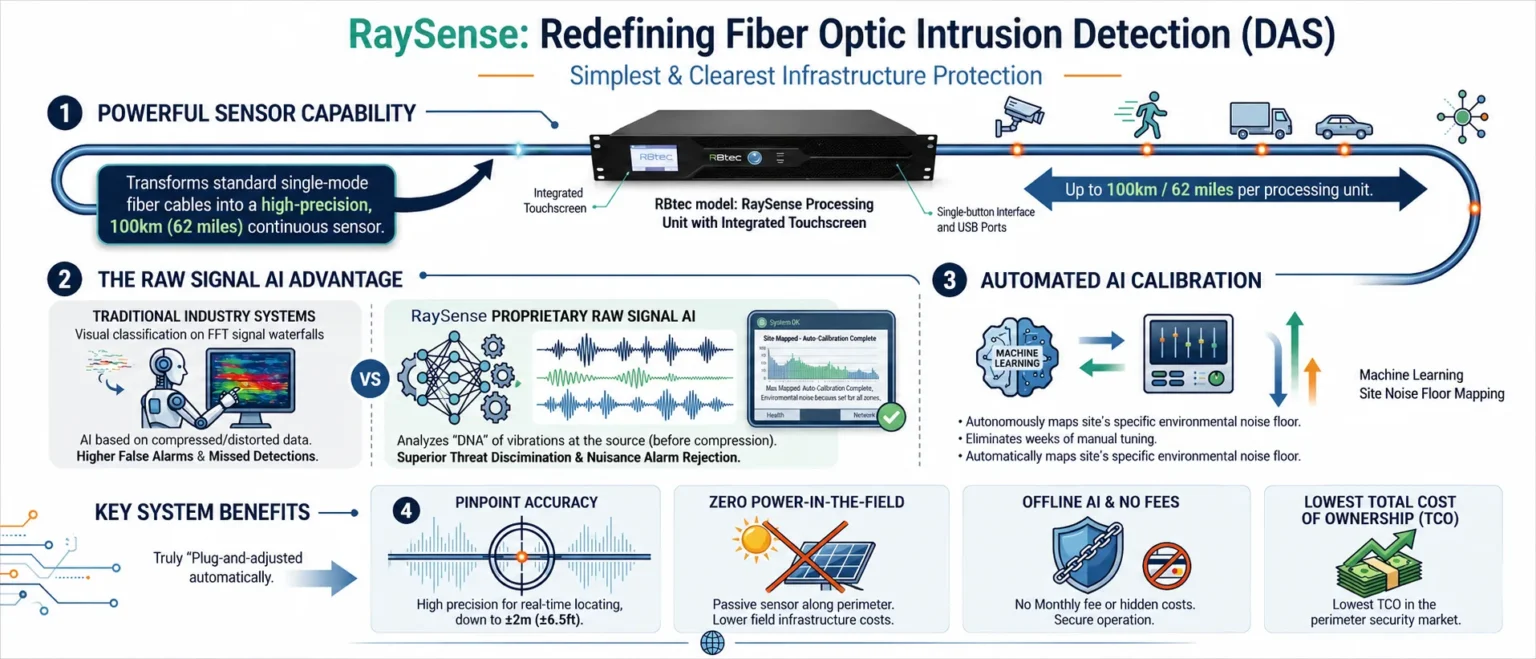
RaySense の分散型音響センシング(DAS)システムは、 光ファイバー侵入検知システム category by turning standard single-mode fiber cables into a high-precision, 100km continuous sensor. Mounted on the fence fabric, it works as a fiber optic fence security system: the cable itself is the sensor, with no power or electronics along the fence. While industry-standard systems often claim “AI integration” by merely performing visual classification on signal waterfalls (FFT), RaySense utilizes a proprietary 生信号AIエンジン(Raw Signal AI)を採用しています。データが圧縮・変質する前に、発生源で振動の「DNA」を解析することで、RaySenseは従来の周波数ベースのセンサーでは到達できない脅威識別と誤報排除のレベルを実現します。さらに、複雑な技術と現場導入との隔たりを埋めるため、RaySenseには AIによる自動キャリブレーション. This system autonomously maps your site’s specific environmental noise floor, eliminating the weeks of manual tuning typically required. The result is a truly “plug-and-play” infrastructure protection solution that offers 3 m (10 ft) detection resolution, no power in the field, and a low total cost of ownership over long perimeters.
プロセッシング・ユニット1台あたり最大100km/62マイル。
同じケーブルでフェンス上でも地下でも使用できる。
オフラインAI – 月額料金や隠れたコストは一切ありません。
独自の生信号AI
RBtecの統合パートナー
RaySenseのアーキテクチャ詳細
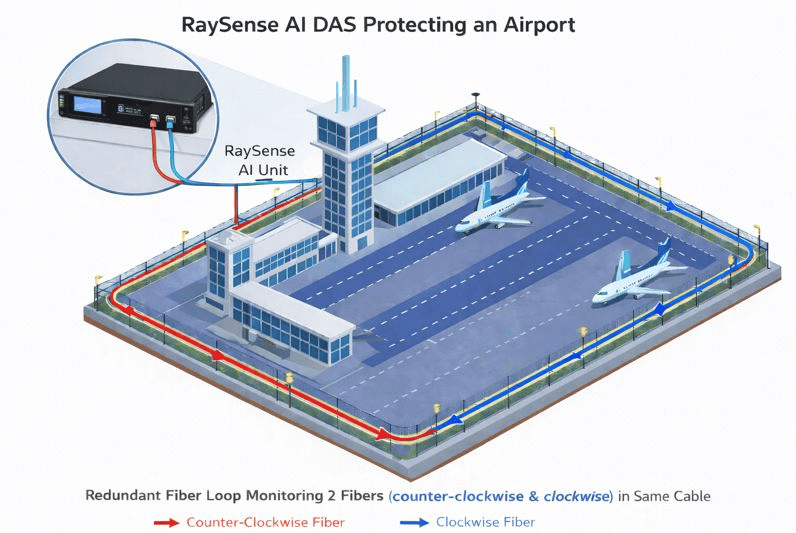
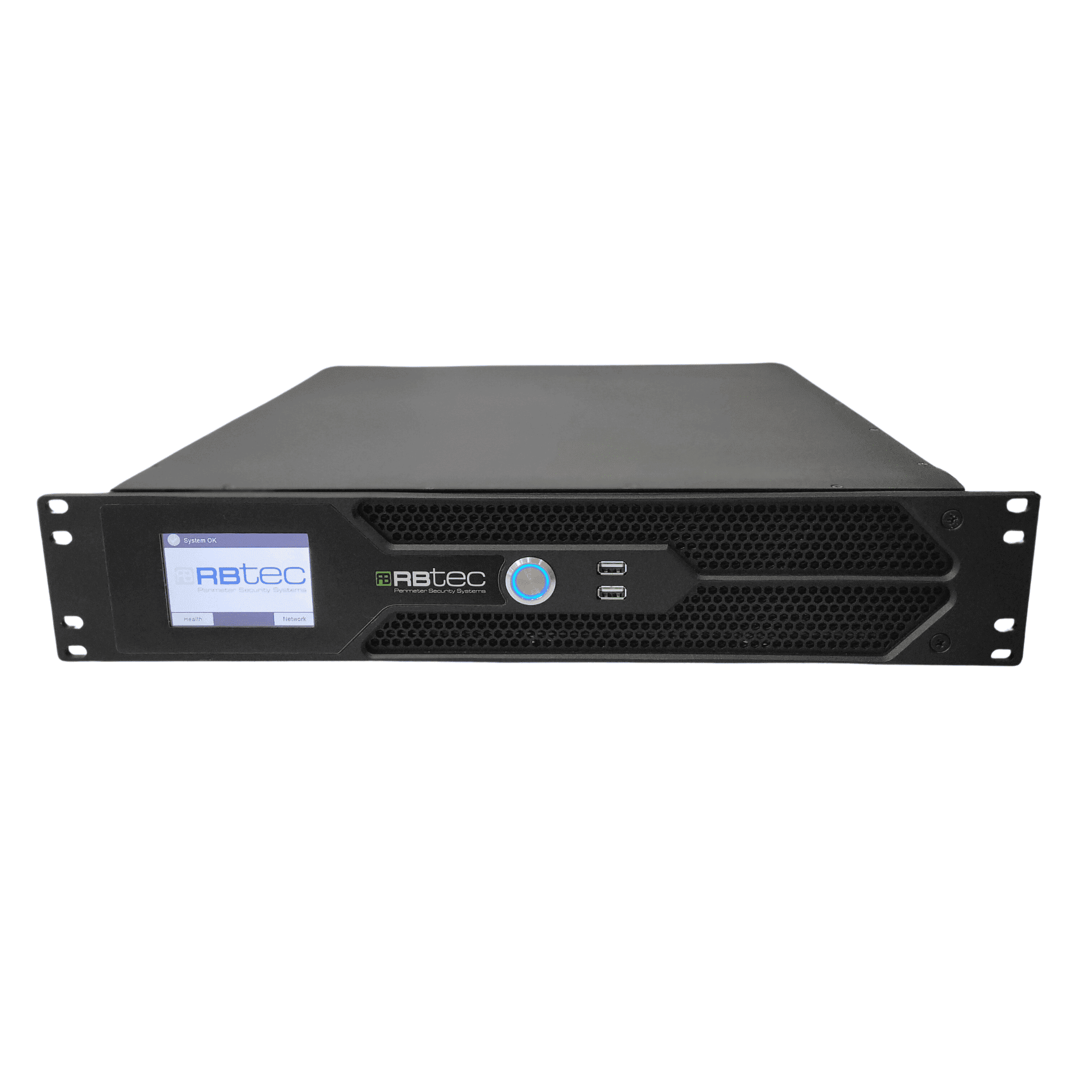
RaySense のシステム構成は、シンプルさと極めて高い堅牢性を目指して設計されており、すべての処理をラックマウント型の1台の アラーム処理ユニット(APU). By utilizing standard single-mode fiber optic cable as the sensor, the system eliminates the need for power, electronics, or communication hardware along the perimeter, with no powered equipment to install or maintain along the perimeter.
現場インフラはゼロ: No electricity or grounding is required in the field. The sensing fiber carries no current, so it is not affected by EMI, RFI or lightning-induced surges along the perimeter; the APU is installed indoors.
バーチャルゾーニング: The physical cable is divided into software-defined zones (sensor sections), allowing camera call-up and localized alarm triggers without changing the physical layout.
フェンス設置・埋設・ハイブリッドの各用途に対応 The same RaySense platform can protect fence-mounted sections, buried routes, or mixed layouts, making it easier to standardize one detection architecture across complex sites. Different detection algorithms are used for fence and buried zones.
How RaySense Fence-Mounted Intrusion Detection Works
1. Install the sensing cable on the fence. A standard single-mode fiber optic cable (armored, loose-tube) is attached to the fence fabric along the protection line. Cable mounting, gates, corners and transitions are designed for the fence construction and the site layout. There is no power and no electronics along the fence; the fiber itself is the sensor.
2. Measure vibration along the fiber (COTDR). The Alarm Processing Unit sends laser pulses through the cable and analyzes changes in the backscattered light using Coherent Optical Time Domain Reflectometry, the principle behind Distributed Acoustic Sensing. Vibration transmitted through the fence changes the light pattern at that point on the fiber.
3. Locate and classify the event. The AI engine analyzes the vibration pattern, separates cutting, climbing and lifting from wind, rain and traffic, and reports an alarm with its location through the configured monitoring interface. Detection resolution is 3 m (10 ft) between detection points along the fiber; simultaneous disturbances are reported individually when at least 40 m (130 ft) of cable separates them. Zones and sensitivity are commissioned for local fence and weather conditions. A fence-mounted RaySense detects climbing, cutting and tampering on the fence; it does not detect a person standing near the fence without touching it. For open ground, see the RaySense LGDS buried fiber optic intrusion detection system.
RaySense向けVidalertアラーム管理ソフトウェア
RaySense Ai DAS – フェンス向け光ファイバーセンシング
光ファイバーケーブル:
シングルモード光ファイバーケーブル。
検知チャンネル数:
1台につき2つのファイバー・チャンネルを同時にリアルタイムで独立した侵入検知を行います。
検知距離:
1-100 km 1-60 マイル
センシング技術:
コヒーレント光学時間領域反射率計(COTDR)。
最大ファイバー損失:
12dB
動作寿命:
> 10 years (dependent on operating environment and regular maintenance)