














Pobierz studium przypadku (PDF)
A high-security state correctional facility layered two RBtec technologies over one perimeter: RaySense fiber optic detection along miles of fence and PulseVi 3D LiDAR watching the sally port and vehicle gate, both feeding Genetec Security Center with camera call-up to the alarm location. A security integrator completed the installation in a few weeks without changing facility routines. Customer identity withheld at the client’s request.
Jaki rodzaj obiektu był chroniony?
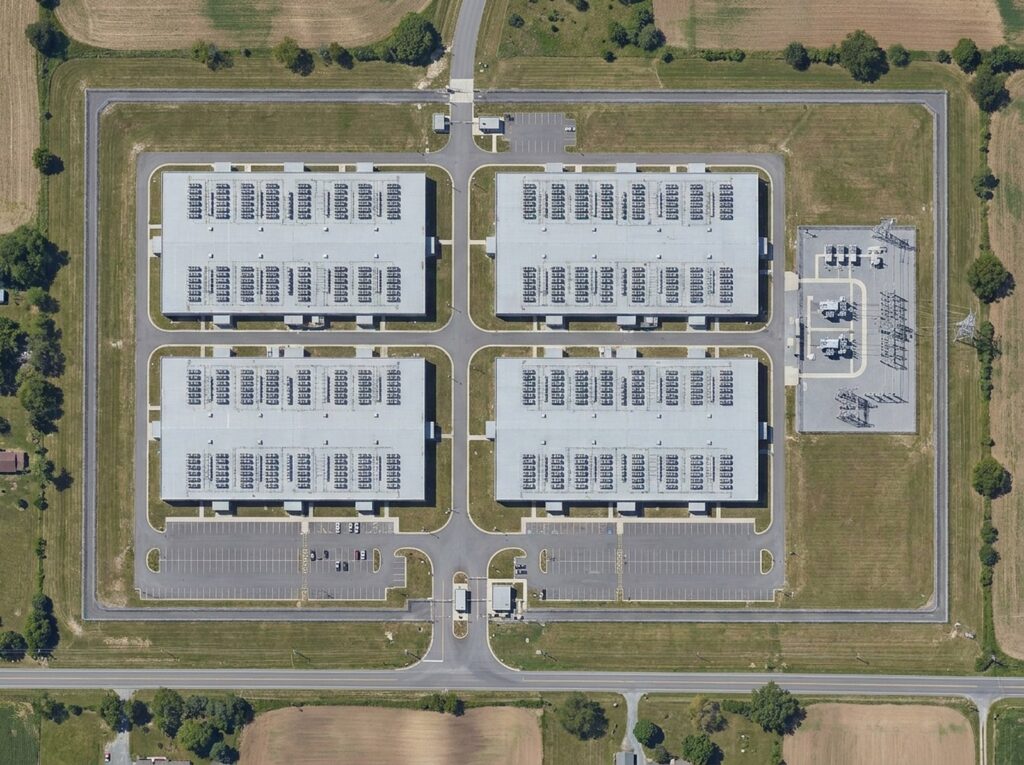
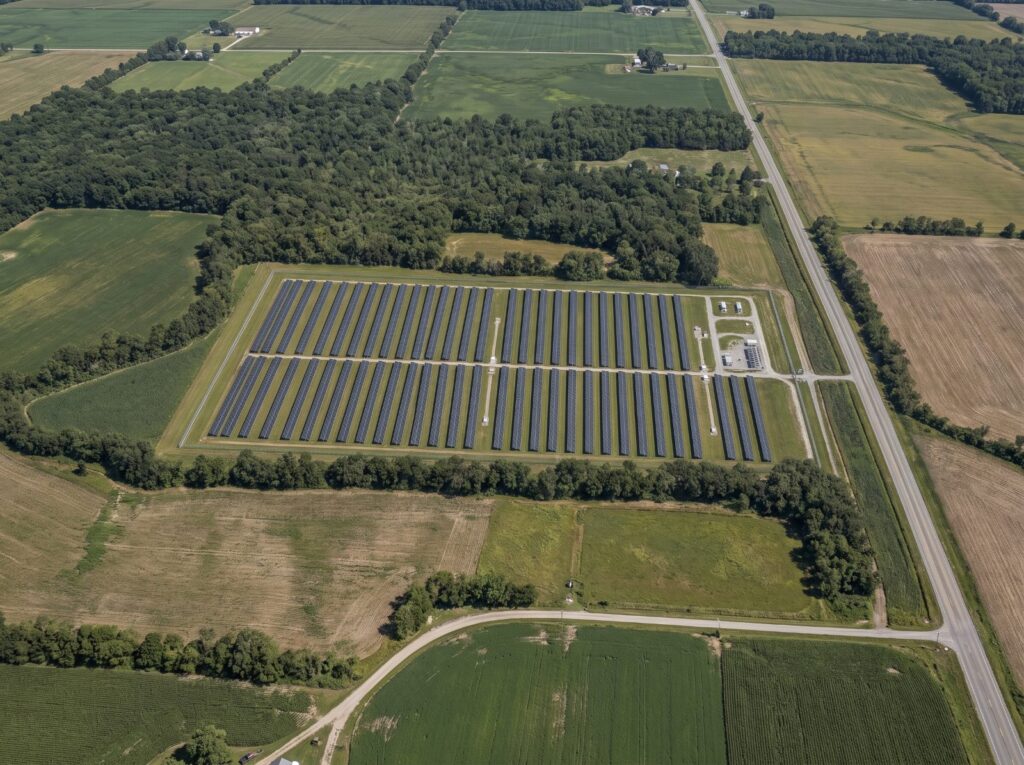
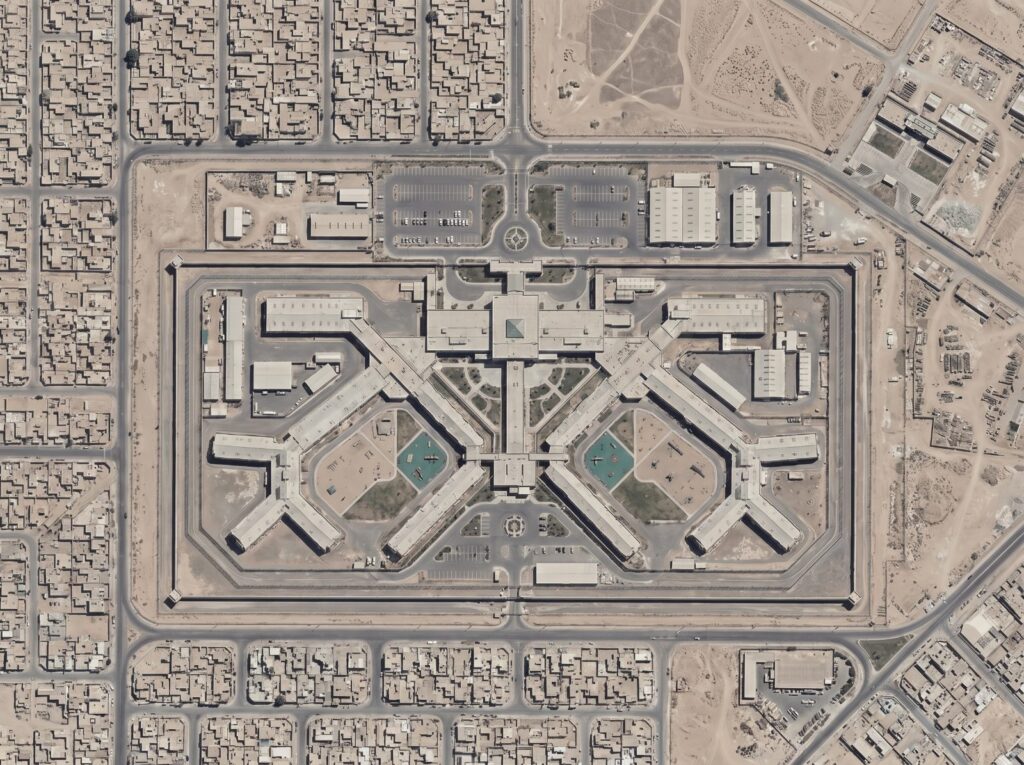
The customer operates a high-security state correctional facility holding a significant inmate population. The perimeter fence line runs for miles, and inside it the site works to a fixed rhythm: counts, controlled movements, yard time, and a steady flow of authorized vehicles in and out through the sally port.
Corrections is a category RBtec knows well. RBtec perimeter detection holds approval from the US Federal Bureau of Prisons, and the technologies deployed here are the same ones specified in that market.
What was the facility up against?
Two problems, and they point in opposite directions.
The first is the outer fence: escape attempts from inside, and intrusion or contraband throws from outside. On a fence line measured in miles, a bare alarm is not enough. A tactical team needs to know where the event is happening, to within meters, while it is still happening.
The second is the sally port. A vehicle gate that opens all day for authorized traffic defeats simple sensors, because almost everything it sees is legitimate. The facility’s video analytics produced a stream of nuisance alerts in that area, and the gate still had to be watched at night, when camera-based tools work at their worst. Tailgating behind a cleared vehicle and contraband drops at the gate were the specific worries.
Why two technologies instead of one?
Because the two problems have different shapes. A fence sensor is the wrong tool at a gate that opens hundreds of times a week, and a gate sensor cannot watch miles of fence. The facility layered one technology for each problem instead of stretching one technology across both.
Beam-based sensors were ruled out for the gate area for documented reasons: microwave links and active infrared depend on flat ground, precise alignment and a clear line of sight, and their known weaknesses include nuisance alarms from small animals and degraded performance in fog and heavy rain. None of that behaves well in a gate area full of legitimate movement.
Co zostało zainstalowane?
Along the perimeter fence, the facility installed RaySense, RBtec’s AI-driven distributed acoustic sensing system. A fiber optic cable mounted on the fence fabric senses along its entire length, and the RaySense unit classifies each disturbance and places it on the fence to within approximately 3 m. The cable itself is passive glass: no power, no electronics and nothing serviceable along the fence line.
At the sally port and vehicle gate, the facility installed PulseVi, RBtec’s 3D solid-state LiDAR. PulseVi measures distance rather than capturing an image, building a three-dimensional picture of the volume it watches. Because it does not depend on light, darkness does not change how it works, and because it sees position and size in three dimensions, it is configured to treat a cleared vehicle and a person moving alongside that vehicle as two different things.
Jak wdrożono system?
A security integrator carried out the installation over a few weeks. The fence work moved section by section along the perimeter, and the PulseVi units were mounted to cover the sally port approach and gate area.
Facility routines did not change: no altered counts, no rescheduled movements, no lockdowns attributed to the project. In a correctional environment that is a real constraint, and it shaped the sequencing of the work as much as the technology did.
Commissioning ended with witnessed tests along the fence and at the gate, so the control room saw located alarms from known test points before the system entered service.
Do czego podłącza się system?
Both technologies feed the facility’s Genetec Security Center platform. A RaySense alarm arrives with its location on the fence, and Security Center calls up the cameras covering that stretch. A PulseVi alarm at the sally port cues the gate cameras the same way.
The control room sees one operational picture: an alarm, a location, and live video of it, in the platform the operators already use. Response teams are dispatched to a point on the perimeter, not sent to sweep a fence line.
Co się zmieniło po instalacji?
The design intent is that a climb or cut attempt anywhere on the fence raises a located alarm in the control room while the attempt is in progress, and that the sally port is monitored continuously, day and night, without depending on an operator watching a screen. RBtec has not published measured before and after alarm or incident counts for this facility.
The layered design also removes the coverage seam that a single-technology perimeter leaves at the gate, which is historically where correctional perimeters are tested hardest.
A prison perimeter is two different problems in one site. Along the fence the question is where, down to a few meters on a mile of chain-link. At the sally port the question is what: a vehicle, a person, or a person where only a vehicle should be. We used a different sensor for each question and put both answers on the same Genetec screen.
Zespół inżynierów RBtec
Co zostało wdrożone
| System | RaySense AI DAS fiber optic detection + PulseVi 3D solid-state LiDAR |
|---|---|
| Customer | High-security state correctional facility |
| Zadaszenie ogrodzenia | Perimeter fence line measured in miles, sensed along a fiber optic cable |
| Location precision | Approximately 3 m location class on the fence |
| Sally port coverage | PulseVi 3D LiDAR volumetric monitoring of the sally port and vehicle gate |
| Operation in darkness | LiDAR measures distance rather than capturing an image, so darkness does not change how it works |
| Field electronics at the fence | None, passive optical cable only |
| Integracja | Genetec Security Center, camera call-up to the alarm location |
| Instalacja | Security integrator, a few weeks, facility routines unchanged |
| Approvals context | RBtec perimeter detection holds US Federal Bureau of Prisons approval |
Pobierz studium przypadku (PDF)
Jaki jest następny krok?
For a correctional facility, the design starts from two numbers and one drawing: total fence length, the number of vehicle entry points, and a site plan showing where the sally ports sit. Send RBtec those and we will return a layered design covering both the fence line and the gates, with an integration plan for your VMS or PSIM.
Firma RBtec Perimeter Security Systems zajmuje się produkcją zewnętrznych systemów wykrywania wtargnięć od 1986 roku, a do tej pory zainstalowała ponad 5 000 systemów w 57 krajach.
 RaySense fiber optic detection sensing along miles of fence from a single cable.
 One control room picture: alarm, location and live video in the platform operators already use.