













Pobierz studium przypadku (PDF)
A national border security agency instrumented remote border sectors with RaySense buried fiber optic detection: tens of kilometers per sector on a single unit, fully covert underground, classifying foot traffic, vehicles and digging near the line and delivering located alarms to the agency’s command center. Civil contractors carried out the burial work under RBtec design and commissioning supervision. Customer identity withheld at the client’s request.
Jaki rodzaj obiektu był chroniony?
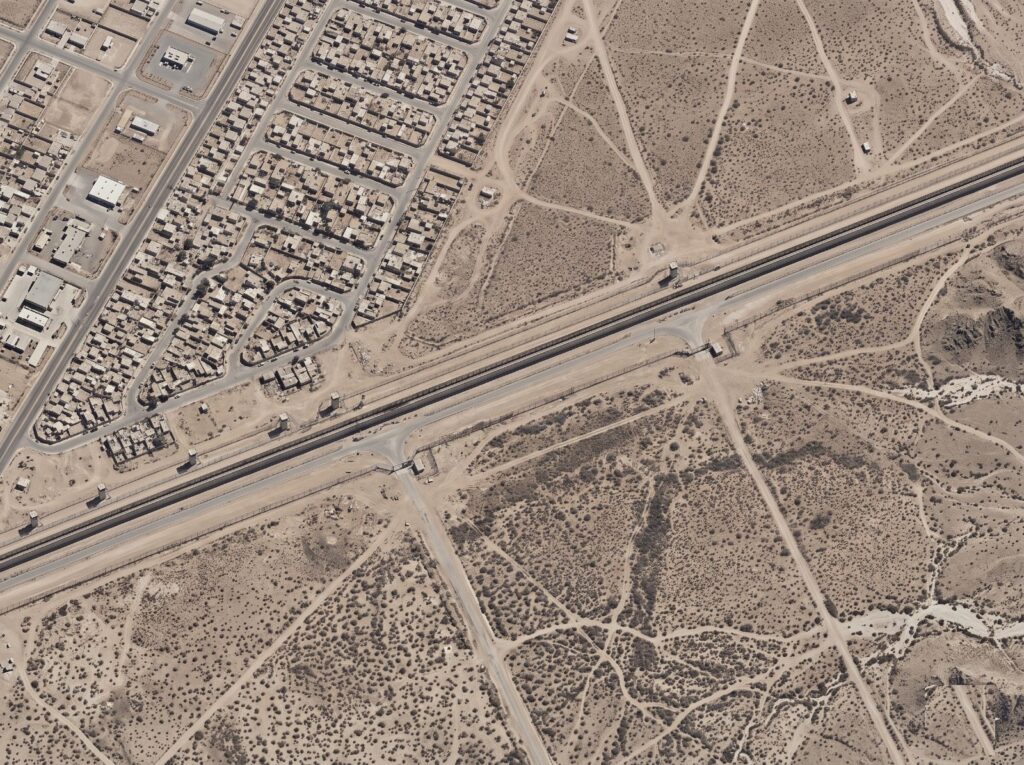
The customer is a national border security agency responsible for monitoring thousands of miles of remote, largely unpopulated terrain. The sectors in question have no buildings, no power distribution and often no road running alongside: hills, thick vegetation and deep valleys, crossed by people and vehicles that do not want to be seen.
In terrain like this a physical fence is a blunt instrument. It is expensive to build and maintain over distance, it can be climbed or cut in minutes, and it tells everyone exactly where the boundary and its defenses are.
What was the problem with conventional surveillance?
The technologies usually offered for borders, ground radar and long-range cameras, share one dependency: line of sight. A radar cannot see behind a hill. A camera cannot see through vegetation or into a valley floor. In rolling or broken terrain, coverage maps of line-of-sight systems are archipelagos of blind spots, and experienced crossers learn where those blind spots are.
Infrastructure is the other half of the problem. Every radar or camera tower needs power, communications and an access road for maintenance, none of which exist in these sectors. Building that infrastructure along tens of kilometers of remote terrain costs more than the sensors it carries, and every tower is itself a visible marker of where coverage begins and ends.
The agency needed the opposite: a linear sensor that follows the natural contour of the land, meter by meter, with no gaps behind terrain features, no infrastructure along the route, and nothing that gives away its own presence.
Co zostało zainstalowane?
The agency deployed wykrywanie światłowodowe ukryte w ziemi RaySense. A fiber optic cable is trenched into the ground along the line to be protected and becomes the sensor along its entire length: the RaySense unit reads the ground-borne vibration reaching the cable and classifies what is causing it.
The system is designed to distinguish the signatures that matter at a border: footsteps, moving vehicles, and digging near the line, the last of which matters wherever tunnels and shallow crossings under the line are a known tactic. When the unit raises an alarm, it places the event on the line to within meters.
Each sector runs on a single RaySense unit covering tens of kilometers, with the platform rated for up to 50 km in one direction and 100 km in total per unit. The cable itself is passive glass: no power, no electronics and no maintenance points anywhere in the field.
Why does buried matter?
Because after backfill there is nothing to see. The sensor is 100% covert: no posts, no hardware, no disturbed sightline, nothing an approaching intruder can spot, map or plan around. A fence announces the boundary and invites a countermeasure; a buried line simply listens.
Covert also means protected. There is nothing above ground to cut, steal, shoot or weather, which matters in sectors where the nearest maintenance crew is hours away.
Jak wdrożono system?
Civil contractors carried out the trenching and burial, sector by sector, with RBtec supervising the route design, the burial depth and the commissioning. A sector takes weeks: the cable is trenched along the planned line, backfilled, spliced back to the sector station, and then walked and driven over in controlled tests while the classifier is tuned to that sector’s ground.
Ground matters for a buried sensor: soil type and moisture affect how vibration carries, which is why commissioning is done against the real ground of each sector rather than from a standard template.
Do czego podłącza się system?
Located alarms feed the agency’s command center, alongside the systems its operators already use. An alarm arrives as an event with a position on the line, which is what a dispatcher actually needs: patrols are sent to a point, not to a sector.
Nothing at the command center was replaced. The RaySense unit at each sector station hands its events onward through standard interfaces, so the deployment added a sensing layer to the agency’s existing operational picture rather than another screen to watch.
Co się zmieniło po instalacji?
The design intent is that a crossing attempt in an instrumented sector, on foot, by vehicle, or by digging, raises a located alarm in the command center while it is in progress, including in terrain no camera or radar was covering. RBtec has not published measured before and after detection or interdiction counts for this agency.
A buried line changes the psychology of a border. A fence announces where the detection is and invites a plan. Buried fiber gives an intruder nothing to plan against: the first sign that a sector is instrumented is a patrol arriving at your position.
Zespół inżynierów RBtec
Co zostało wdrożone
| System | RaySense buried fiber optic intrusion detection |
|---|---|
| Klient | National border security agency |
| Coverage model | One RaySense unit per sector, tens of kilometers each |
| Unit range | Up to 50 km in one direction, 100 km total per unit |
| Wykrywa | Foot traffic, vehicles, and digging near the line |
| Location | Places an event on the line to within meters |
| Visibility | Buried, nothing above ground: 100% covert |
| Elektronika polowa | Brak, tylko bierny kabel optyczny |
| Integracja | Located alarms into the agency’s command center |
| Instalacja | Civil contractor with RBtec design and commissioning, weeks per sector |
Pobierz studium przypadku (PDF)
Jaki jest następny krok?
For a border agency or any operator of long linear assets, the design starts from a route map: the line to be instrumented, where sector stations with power can sit, and the ground conditions along the way. Send RBtec a route and we will return a sector plan, unit count and burial specification.
Firma RBtec Perimeter Security Systems zajmuje się produkcją zewnętrznych systemów wykrywania wtargnięć od 1986 roku, a do tej pory zainstalowała ponad 5 000 systemów w 57 krajach.
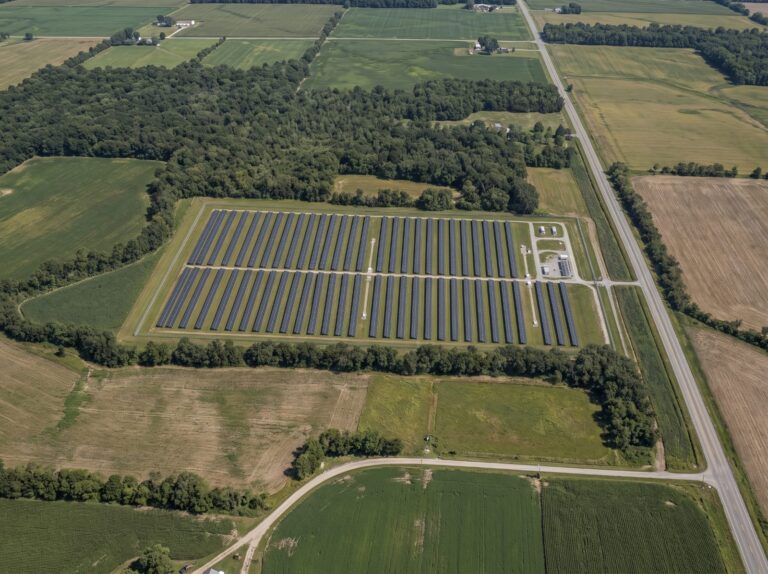
 RaySense buried fiber following the terrain contour, tens of kilometers per sector.
 Coverage that follows the ground, with no blind spots behind terrain features.