













A break-in at a Dominion Energy substation in Summerville, South Carolina ended about as well as one of these incidents can end. Two men were caught inside the fence, and officers made arrests while the suspects were still on the property. What makes the case worth studying is not the outcome. It is the order in which things happened.
Aslında Ne Oldu
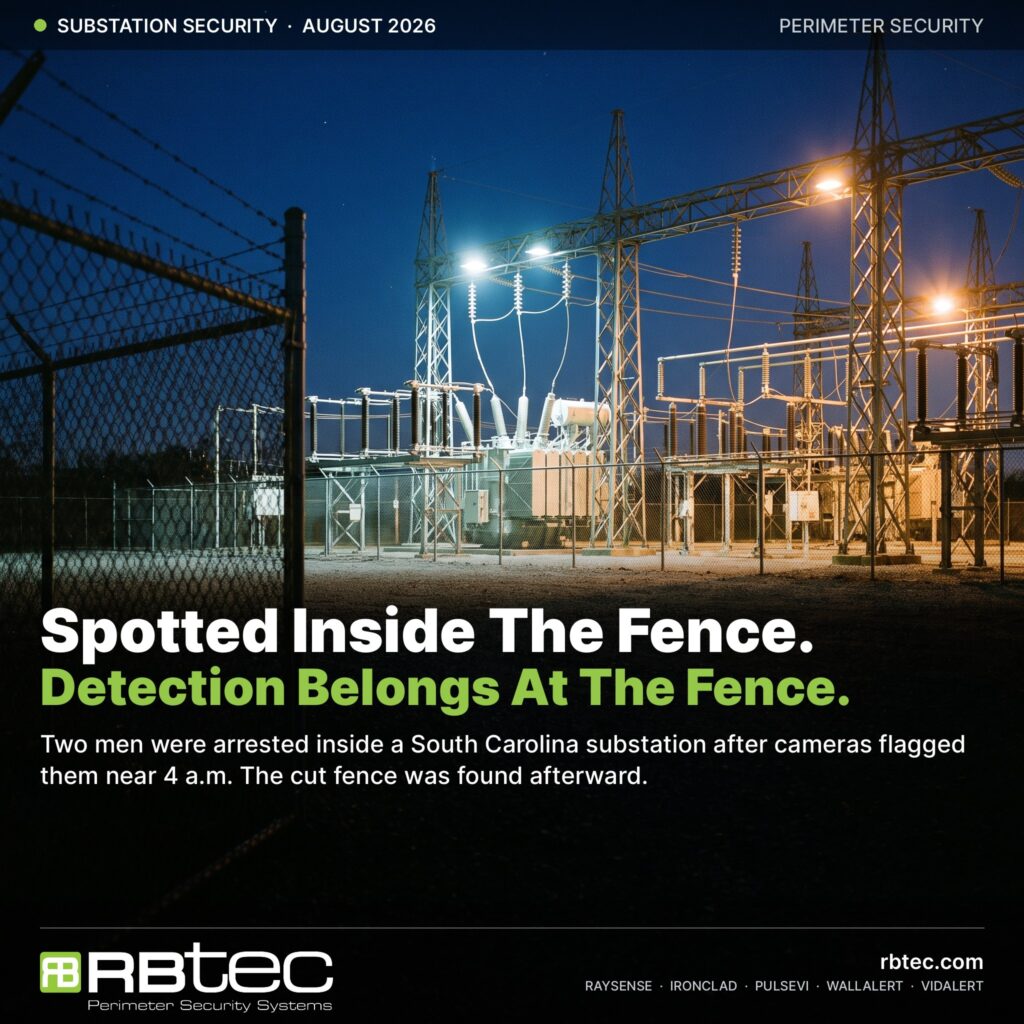
According to Summerville Police, reported by Live 5 News, Dominion Energy Security notified officers after seeing two people on surveillance cameras inside the property in the 400 block of Orangeburg Road just before 4 a.m. on Tuesday, August 25. Officers arrived and located two suspects inside the fenced portion of the substation, and took both into custody with the help of a K-9 unit.
Officers later determined that the suspects had cut a hole in the substation’s perimeter fence and used bolt cutters to remove 40 pounds of copper cable from the property, according to Deputy Chief Chris Hirsch. Both men were booked into the Dorchester County Detention Center on charges that include possession of burglary tools, theft of nonferrous metals and burglary.
The camera sighting came first in the report. The fence cut came first in reality.
Tespit Boşluğu
The alert here came from a camera view of two people who were already inside the fence line. That is verification doing exactly what verification is for. Someone saw a live picture, confirmed that two people were somewhere nobody should be at 4 a.m., and gave police a real address instead of an ambiguous alarm. Plenty of sites would not have gotten that far.
The gap sits earlier. Before there was anything to see inside the yard, someone stood at the boundary and cut through the fabric. During that window the site had no signal that its perimeter had been broken. How long the window lasts depends on where the cut is made, how the yard is lit, which way the nearest camera faces, and whether anyone is watching that view in the middle of the night.
Camera analytics depend on line of sight, lighting, weather, distance, placement, maintenance and tuning, and a switchyard strains all of them. Transformer banks, steel lattice and control cabinets create constant occlusion, and a person crouched at the fence line behind equipment may not resolve into a clean target until they move into open gravel. Cameras verify what they can see. The fence line is often the part they see worst.
IRONCLAD Bu Sorunu Nasıl Çözüyor?
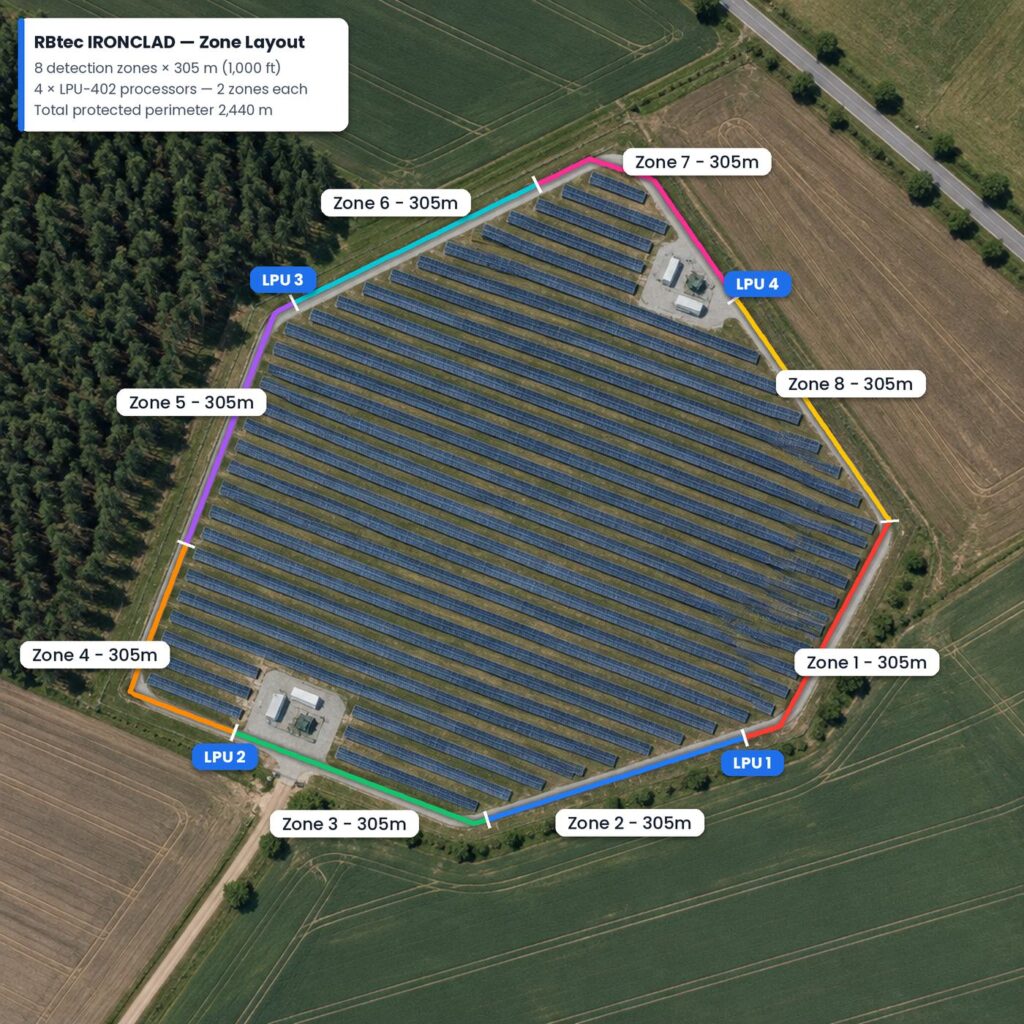
IRONCLAD is a fence-mounted intrusion detection system that attaches to the existing chain-link fabric and senses the mechanical disturbance created by cutting, climbing or lifting it. The event that starts the incident becomes the event that raises the alarm, and the alarm arrives tied to a zone rather than to the whole site.
That changes what the cameras are asked to do. Instead of an operator noticing something unusual somewhere in a wide view, the system points to a specific stretch of fence at a specific second. The camera then confirms whether the disturbance is a person, an animal or weather. Detection and verification are complementary, and they work best when detection sits at the boundary.
For energized switchyards there is a second option worth weighing. RaySense uses a fiber optic sensing cable, which is not affected by electromagnetic interference and carries no metallic conductor along the fence line. That is a practical consideration inside a substation. Either sensor can be tied into Vidalert so that an alarm and the matching camera view land in front of an operator together.
Tesis Sahiplerinin Sorması Gerekenler
- If a section of our fence were cut tonight and nobody was watching that monitor, how would we find out, and when?
- Which stretches of the perimeter are outside camera coverage or blocked by equipment?
- When an alarm comes in at 4 a.m., does it arrive with a zone attached, or does someone have to search for the problem?
- Who receives that alarm, and what do they do in the first sixty seconds?
- When did anyone last walk the full fence line looking for old cuts or loose fabric?
Özetle
This one worked. A person was watching, the call went out, and officers reached the yard in time. Most substations do not have someone watching every view at 4 a.m., and most switchyards do not give a camera a clean look at the base of the fence.
Detection at the boundary does not replace cameras, and it does not make a site immune to intrusion. What it does is start the clock at the cut instead of at the sighting, and hand the camera a place to look. If you want to walk through where the gaps sit on your own perimeter, iletişime geçin.