














Descarga el estudio de caso (PDF)
A regional commercial bank protected the vault rooms of its branches and its central cash-processing hub with WallAlert, RBtec’s wall intrusion detection system: sensor cable on the vault walls and ceiling, one to two zones per site on a single LPU-402 processor, armed around the clock and reporting through the bank’s existing alarm panel to its central station. A security integrator completed each site in a few days with branches operating as usual. Customer identity withheld at the client’s request.
¿Qué tipo de sitio se estaba protegiendo?
The customer is a regional commercial bank operating multiple high-traffic branches and a central cash-processing hub. Every site has a vault room, and every vault room already sits behind layers of security: access control, interior motion detection, cameras, and a monitored burglar alarm.
What those layers share is a blind side. They watch the inside of the secure area and the doors into it. None of them watch the walls.
The cash-processing hub sharpened the question. It concentrates more cash than any branch, it runs longer hours, and its vault shares structure with the rest of an ordinary commercial building. Whatever the bank chose had to work identically at a small branch and at the hub.
What was the gap at the vault wall?
Physical attacks on banks have shifted toward the building fabric: drilling or breaking through a vault wall from an adjacent tenancy, a neighboring basement, the roof, or the exterior of the building. An intruder working through the wall never crosses a door contact and never enters a motion sensor’s view until the wall is already open, and at that point the response clock starts far too late.
The bank wanted the clock to start at the other end of the attack: at the first minutes of drilling or cutting, while there is still a wall between the intruder and the cash.
Why not standard vibration sensors?
Urban buildings are noisy structures. Traffic, passing trucks, construction nearby and the building’s own services all put vibration into the walls, and a sensor that cannot separate that background from a drill bit produces alarms nobody trusts. Point-type shock sensors also cover only the spot they are mounted on, which leaves the rest of a vault room’s surface area unwatched.
The bank needed continuous coverage across the whole surface of the vault envelope, with tuning against each site’s real background noise.
¿Qué se instaló?
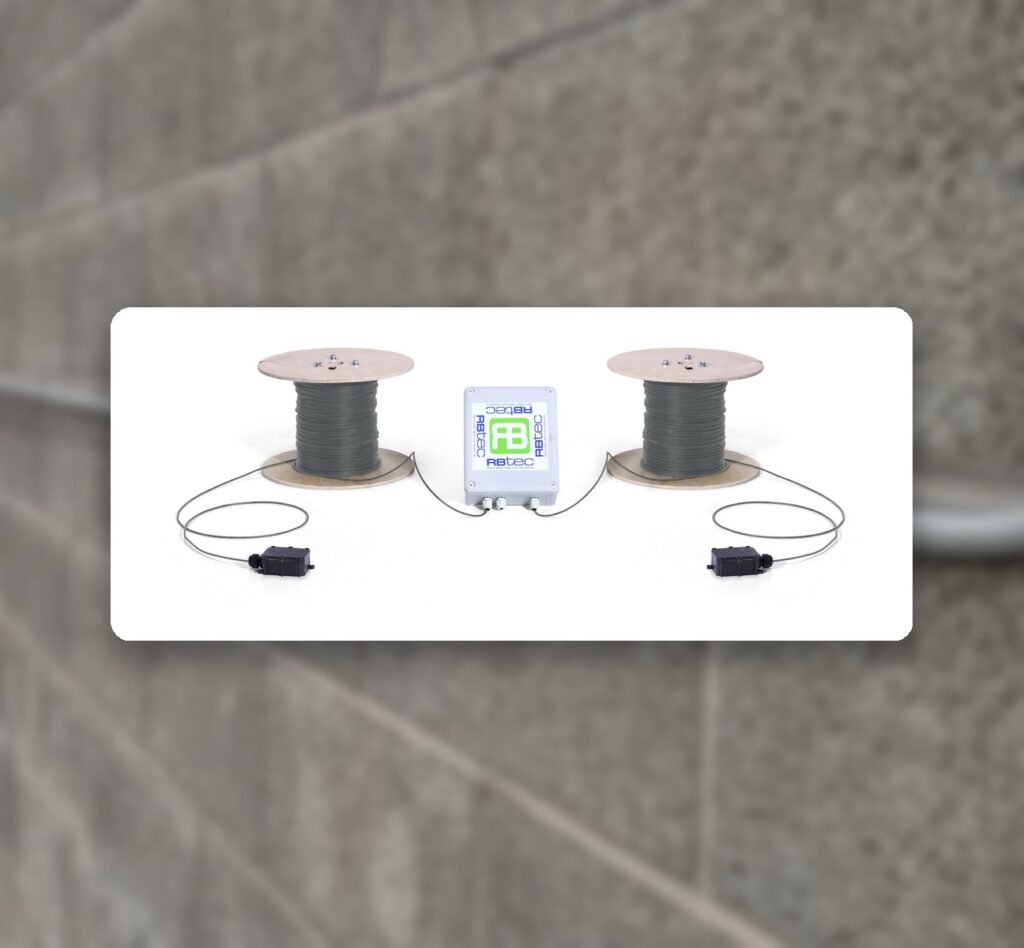
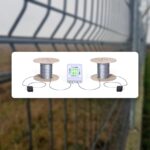
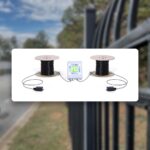
Each site received WallAlert, RBtec’s wall-mounted sensor cable system. The cable runs across the vault room’s walls and ceiling and senses the structure-borne vibration of an attack on the fabric itself: drilling, cutting, hammering and breaking through concrete or brick.
A typical branch runs one or two zones on a single LPU-402 processor, which supports two zones of up to 1,000 ft (305 m) of sensor cable each, far more than a vault room needs, so a single processor covers the vault envelope with capacity to spare. Sensitivity is set per zone, tuned during commissioning against the branch’s own background: the street outside, the HVAC plant, the daily rhythm of the building.
¿Cómo se desplegó el sistema?
The bank’s security integrator installed the system site by site, taking a few days per branch. The work is confined to the vault room and the alarm panel, and the branches stayed open throughout: no closures, no interruption to teller operations, no change to opening hours.
Because the design repeats, the rollout across branches and the cash-processing hub was a pattern, not a series of custom projects: survey the vault room, run the cable, terminate at the processor, wire to the panel, tune.
¿A qué se conecta el sistema?
Each zone’s relay output lands on the bank’s existing burglar alarm panel as a dry contact, and travels the same path every other alarm at the branch travels: panel to central monitoring station. There is no new monitoring platform, no separate keypad and nothing new for branch staff to operate.
One choice matters here: the vault zones are armed around the clock, independent of branch opening hours. An attack on the wall is an alarm at 3 a.m. and at 11 a.m. alike, because a drill through a party wall does not wait for closing time.
¿Qué cambió después de la instalación?
The design intent is that an attack on the vault envelope raises an alarm at the drilling stage, while the wall still stands, giving the central station and police response time that interior sensors cannot give. RBtec has not published measured before and after alarm or incident counts for this bank.
The same cable and processor can extend to ATM rooms and night-deposit rooms where a branch’s risk assessment calls for it, on the same panel and the same monitoring path, so that extension stays open to the bank without any new infrastructure.
A vault is attacked from the side no camera can see. The sensor lives on the structure itself, so the alarm comes from the first minutes of drilling, not from the moment someone steps through the hole. And because it lands on the panel as a dry contact, nothing changed at the monitoring end.
Equipo de ingeniería de RBtec
¿Qué se desplegó?
| Sistema | WallAlert wall intrusion detection |
|---|---|
| Customer | Regional commercial bank, multiple branches and a cash-processing hub |
| Cobertura | Vault room walls and ceiling at each site |
| Zonas | One to two zones per site, on one LPU-402 processor |
| Processor capacity | LPU-402, two zones of up to 1,000 ft (305 m) of sensor cable each |
| Detects | Structure-borne vibration of drilling, cutting and breaking through walls |
| Arming | Vault zones armed around the clock |
| Integración | Dry contacts into the existing bank alarm panel, reporting to the central station |
| Instalación | Security integrator, a few days per site, branches open throughout |
| Garantía | 2 años |
Descarga el estudio de caso (PDF)
¿Cuál es el siguiente paso?
For a bank or cash-handling operation, the design starts from a walk of the vault room: which walls are shared, what sits above and below, and where the panel is. Send RBtec a floor plan marking the vault and its neighbors, and we will return a cable layout, zone plan and panel integration notes your integrator can install from.
RBtec Perimeter Security Systems has built outdoor and structural intrusion detection since 1986, with more than 5,000 systems installed in 57 countries.
 WallAlert sensor cable across the vault room’s walls and ceiling at every site.
 The alarm starts at the drilling stage, while the wall still stands.