














Vaka çalışmasını (PDF) indirin
A federal agency data center campus replaced a failing copper-based fence detection system with the RaySense AI DAS Fiber Optic Perimeter Security System across a 2.5 km (8,200 ft) perimeter, backed by four PulseVi 3D Solid-State LiDAR units covering the gates. Two sensor lines on a mid-railed fence, 11 operational zones with point-accurate location, installed by a security integrator over three weeks in 2026, with the site fully operational throughout and the legacy system left running until commissioning was complete. Alarms feed Milestone XProtect, with Vidalert presenting the RBtec site map alongside. Customer identity and location withheld at the client’s request.
Korunan site ne tür bir siteydi?
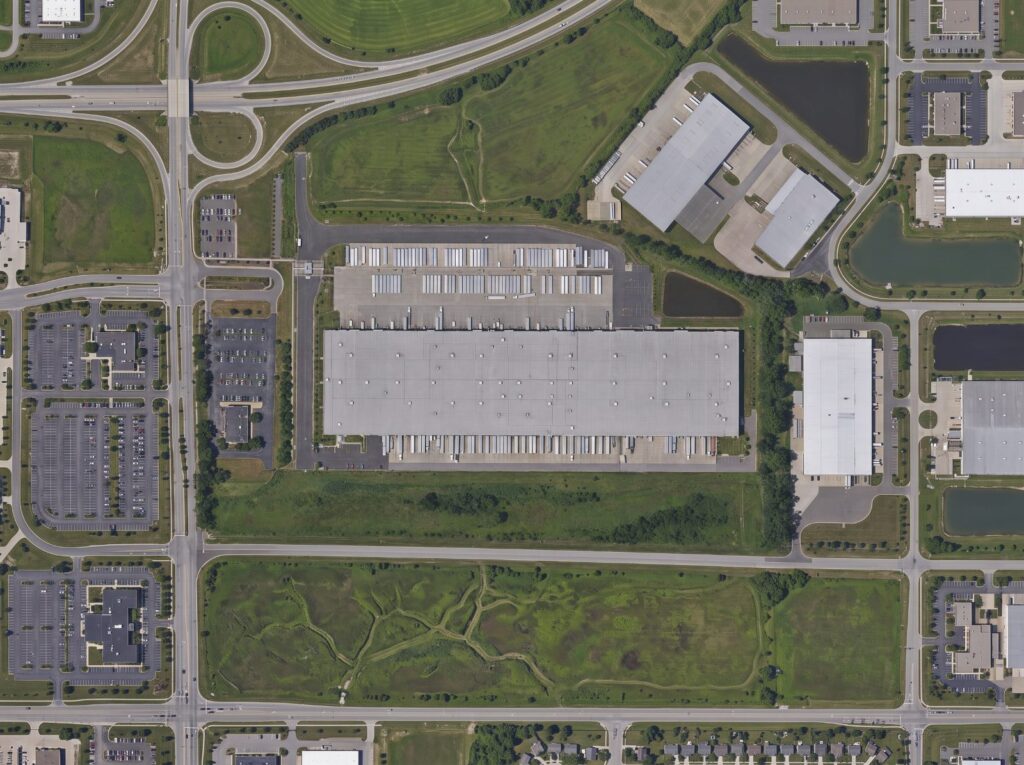
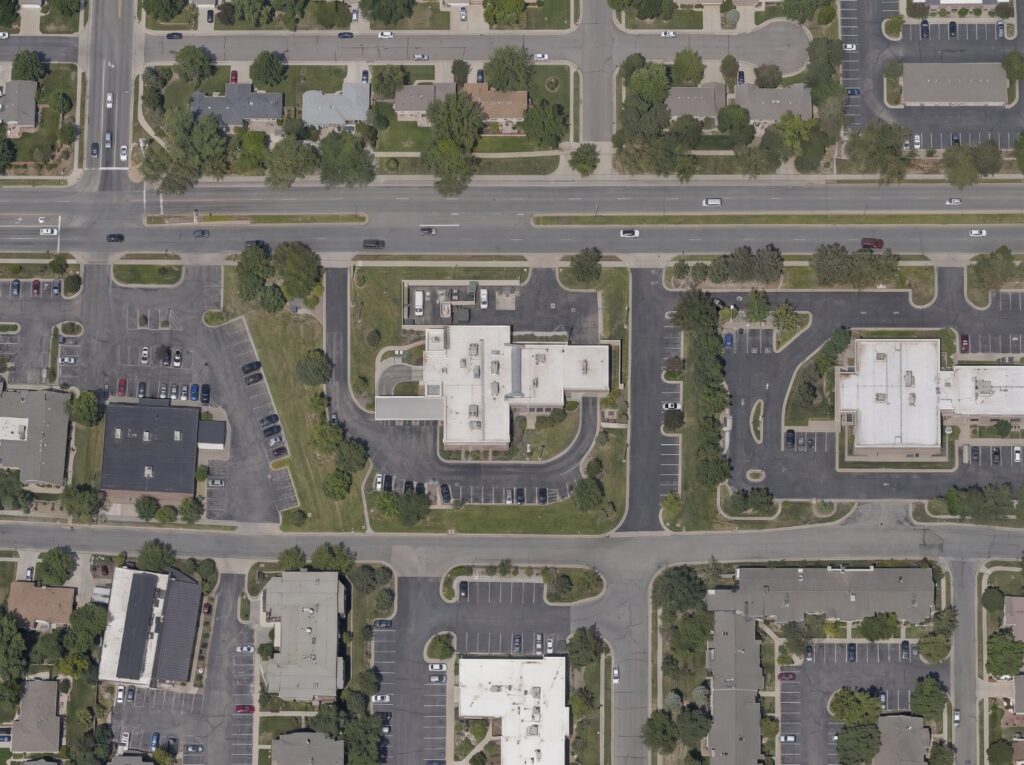
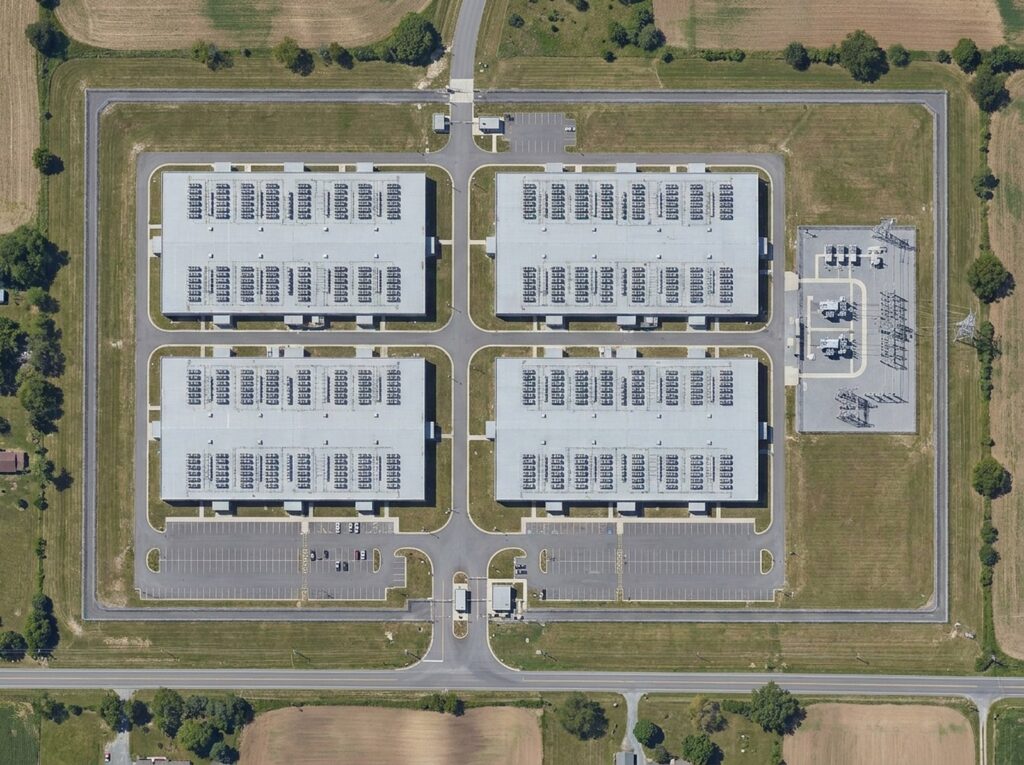
The customer operates a data center for a United States federal agency: a secured campus with a continuous fenced boundary of roughly 2.5 km (8,200 ft), several vehicle and personnel gates, and the uninterrupted-availability requirement that comes with government workloads.
Sites like this have a particular constraint. The perimeter is not just a property line, it is a documented security control. It has to detect reliably, it has to produce a defensible record, and it cannot be taken out of service while it is being improved.
The fence itself is built with a horizontal mid-rail, which divides the fabric into an upper and a lower section. That detail drove the sensor design, and it is the reason a single line of detection would have left half the fence weakly covered.
Çit hattında ne ters gidiyordu?
The campus already had fence-mounted detection: an older copper-based sensor system from another manufacturer. It was failing.
The dominant problem was lightning. The site sees frequent electrical storms, and a copper sensor cable strung around a 2.5 km metal fence behaves like a very large antenna. Strikes and nearby atmospheric discharge coupled into the sensor line, producing false alarms in volume and, over time, damaging the electronics attached to it.
The operational cost of that is worse than the repair bill. A perimeter system that cries wolf during every storm gets treated as noise. Operators learn to discount it. At that point the control still exists on paper but has stopped doing its job, which on a federal site with audit obligations is a problem in its own right.
Why were cameras and patrols not enough?
Both were in place, and both remained in place. Neither solves the same problem.
Cameras on a perimeter this long spend nearly all their time showing empty fence. Someone still has to be looking at the right view at the right moment, and on a 2.5 km boundary that is not a realistic expectation of a human operator. Patrols cover one point at a time, on a schedule an observer can learn.
What the site needed was something that watches the entire fence continuously and says where, so that the cameras and the response team are pointed at the right place at the moment it matters rather than after.
Ne kuruldu?
RaySense AI DAS Fiber Optic Perimeter Security System on the fence, and four PulseVi 3D Solid-State LiDAR units on the gates.
The fence was fitted with two parallel sensor lines, one above the mid-rail and one below, so a climb or a cut is detected on either section of fabric rather than only where the cable happens to run. Across a 2.5 km perimeter that is roughly 5 km of sensor cable in total.
The perimeter was configured into 11 operational zones, aligned to how the site is actually patrolled and responded to. Zones are how the guard force thinks about the campus, but they are not the limit of what the system reports: RaySense provides point-accurate location along the fiber, so an event resolves to a position on the fence, not merely to the zone it fell inside. On a boundary this long, the difference between zone 7 and a specific point is the difference between searching a few hundred meters and walking straight to it.
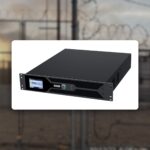
The choice of fiber addressed the lightning problem directly. The RaySense sensor cable is fully dielectric. There is no copper and no powered electronics anywhere on the fence line, so there is nothing out there for a storm to couple into and nothing at the fence to damage. All the electronics sit indoors at one end of the fiber.
The four PulseVi LiDAR units cover the gates, where fence detection stops and controlled access begins. Gates are the deliberate gap in any perimeter: they open, vehicles and people pass through, and a fence sensor cannot distinguish an authorized opening from an exploited one. The LiDAR units track movement in three dimensions through those openings and their approaches.
Copper on a fence is an antenna. Two and a half kilometers of it around a metal boundary, somewhere that gets real storms, and the weather will find it every time. Glass does not have that problem. There is nothing out there to induce a current into. That is the whole reason the false alarms stop.
RBtec mühendislik ekibi
Sistem nasıl devreye alındı?
A security integrator performed the installation in 2026. Work took approximately three weeks, driven by site access limitations rather than by the system itself. A federal facility controls when and where contractors work, and that governs the schedule more than the cabling does.
The campus stayed fully live throughout. No part of the perimeter was taken out of service.
The sequencing is the part worth copying. The legacy copper system was left running for the entire installation and was only removed after RaySense was commissioned and verified. At no point did the site sit on an unprotected perimeter, or depend on a system that had not yet been proven in place. For a facility that cannot accept a coverage gap, that overlap is not a nicety, it is what makes the replacement approvable in the first place.
Sistem neye bağlanır?
Alarms feed Milestone XProtect, the site’s existing video management platform, so a detection event on the fence calls up the covering camera at the moment it happens.
Alongside it, Vidalert presents the RBtec site map, giving operators the perimeter view, where on the fence the event is and which zone it belongs to, next to the video. One surface shows the position, the other shows the picture.
Nothing was replaced at the monitoring end. The operators kept XProtect and kept their procedures. The new perimeter became another input into a system they already work in every shift.
Kurulumdan sonra ne değişti?
The specific, verifiable change is immunity to the failure mode that broke the old system. A dielectric sensor cable cannot conduct an induced surge, so the lightning-driven false alarms and the storm damage to fence electronics do not apply to the replacement. That is a property of the technology, not an estimate.
Beyond that, the design intent is that alarms now arrive with a usable location, that the guard force responds to verified events rather than to a bare siren, and that the gates are covered by detection suited to how gates actually get exploited.
RBtec has not published measured before and after alarm or incident counts for this site.
Ne konuşlandırıldı
| Sistem | RaySense AI DAS Fiber Optic Perimeter Security System |
|---|---|
| Çevre | Approximately 2.5 km (8,200 ft) |
| Sensor lines | Two runs, above and below the fence mid-rail, approximately 5 km of sensor cable |
| Bölgeler | 11 operational zones, with point-accurate location along the fiber |
| Fence electronics | None. Fully dielectric sensor cable, no copper and no powered devices on the fence line |
| Gate coverage | Four PulseVi 3D Solid-State LiDAR units |
| Entegrasyon | Milestone XProtect VMS, with Vidalert displaying the RBtec site map |
| Kurulum | Security integrator, approximately three weeks, site live throughout |
| Cutover | Legacy copper system kept operational until RaySense commissioning was complete |
| Year | 2026 |
Vaka çalışmasını (PDF) indirin
Sıradaki adım nedir?
If you are responsible for a data center perimeter, federal, colocation or enterprise, and your existing fence detection is generating alarms nobody trusts, send us the perimeter length and the fence type. We will come back with a zone plan and a processor count.
Talk to an engineer | Veri Merkezi Fiziksel Güvenliği | RaySense AI DAS | PulseVi 3D LiDAR
 RaySense AI DAS fiber optic sensing across the full 2.5 km perimeter, configured into 11 operational zones with point-accurate location along the fiber.
 Immunity to the lightning-induced false alarms that made the previous system unusable. The sensor cable is fully dielectric.
 No copper and no powered electronics anywhere on the fence line, so there is nothing at the perimeter for a storm to damage.
 Point-accurate alarm location along 2.5 km of fence, instead of a zone-wide area to search.
 Detection at the gates, where a fence sensor cannot tell an authorized opening from an exploited one.