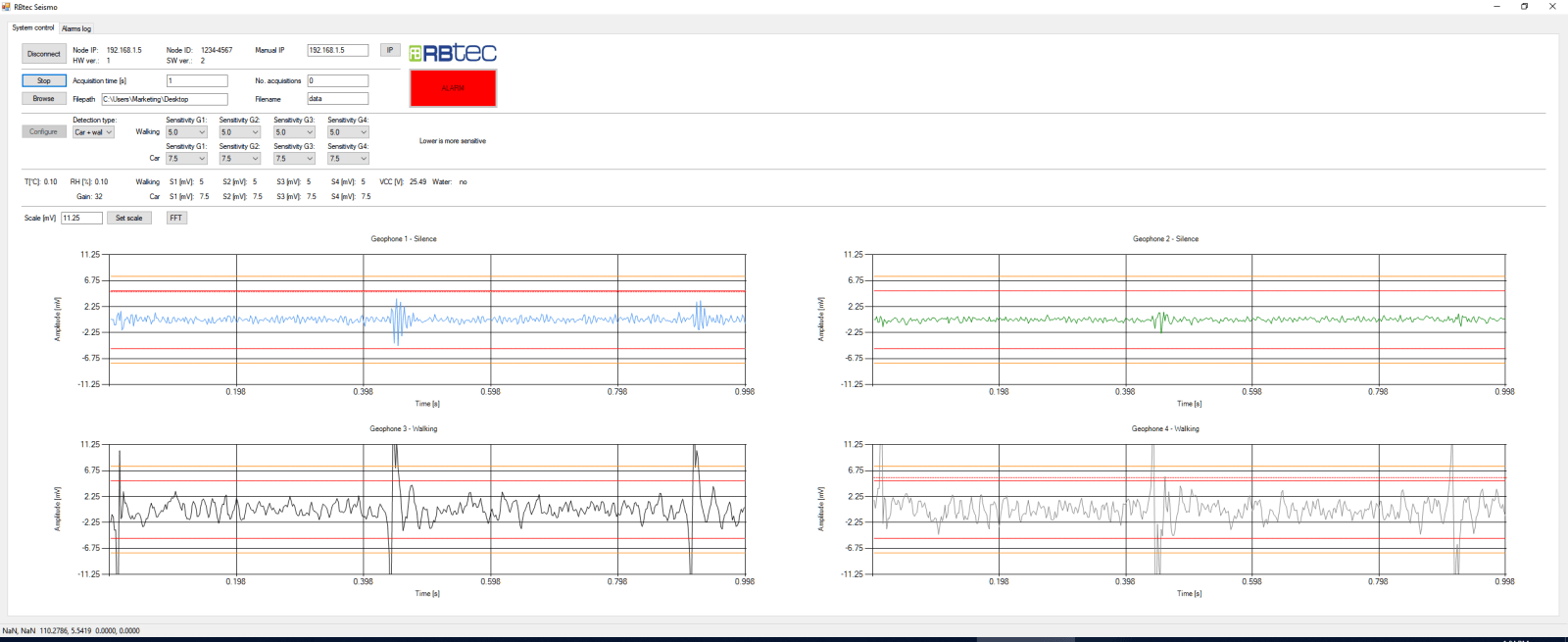














The Seismo Unattended Ground Sensor is a buried seismic detection system. It senses people walking and vehicles driving over the ground above it, with nothing visible on the surface and no fence required. Seismo covers the open ground, approach routes and unfenced boundaries a fence-mounted sensor cannot reach — and it does it covertly.
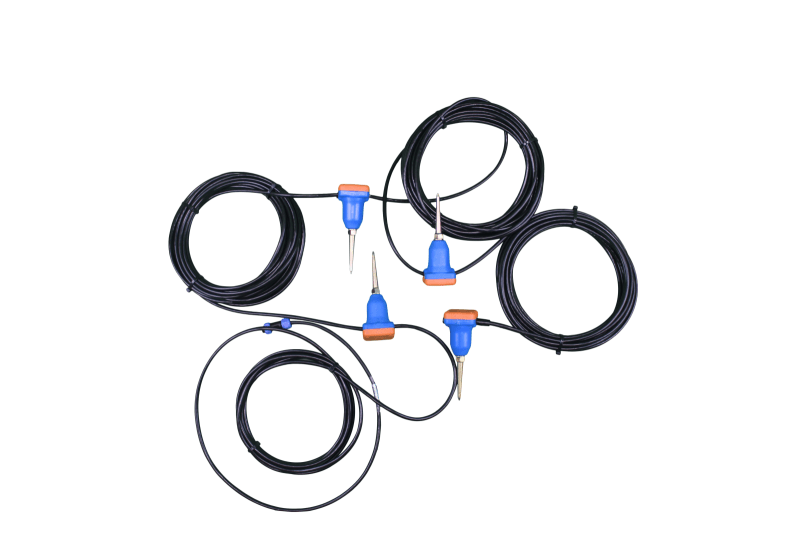
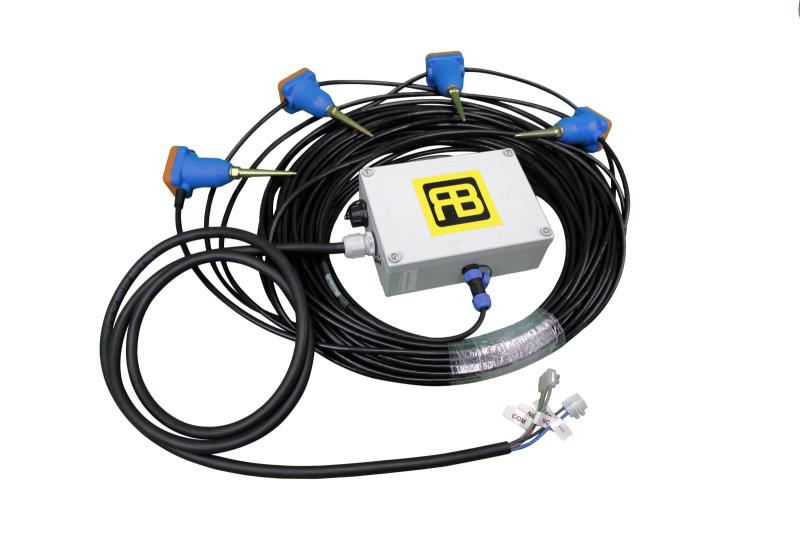
Each system is built from four or eight geophone detectors wired back to a single analyzer. The detectors are buried along the line you want to protect, typically one every 6 to 10 meters (20 to 32 ft), and each one listens to ground vibration in a full 360° circle around itself. The analyzer reads the seismic signature of every disturbance and classifies it, so a person crossing the line is treated differently from a tractor in the next field, from wind, and from rain.
Because the detectors are underground and entirely passive, there is nothing for an intruder to see, photograph or walk around. The system runs on 12–48VDC, is rated IP68 for permanent burial, operates from −30°C to +70°C (−22°F to +158°F), and reports alarms on a dry-contact relay into whatever alarm panel, VMS or SCADA system you already run.
- Completely buried, nothing visible
- No fence or line of sight needed
- Separates footsteps from vehicles
- IP68 sealed for permanent burial

How Does the Seismo Ground Sensor Detect Intruders?
Every footstep, wheel and track puts energy into the ground. Seismo reads that energy and decides what produced it.
- Detection. Each buried geophone turns ground vibration into an electrical signal. The detectors are passive — they transmit nothing, so there is no field for an intruder to sense, jam or spoof.
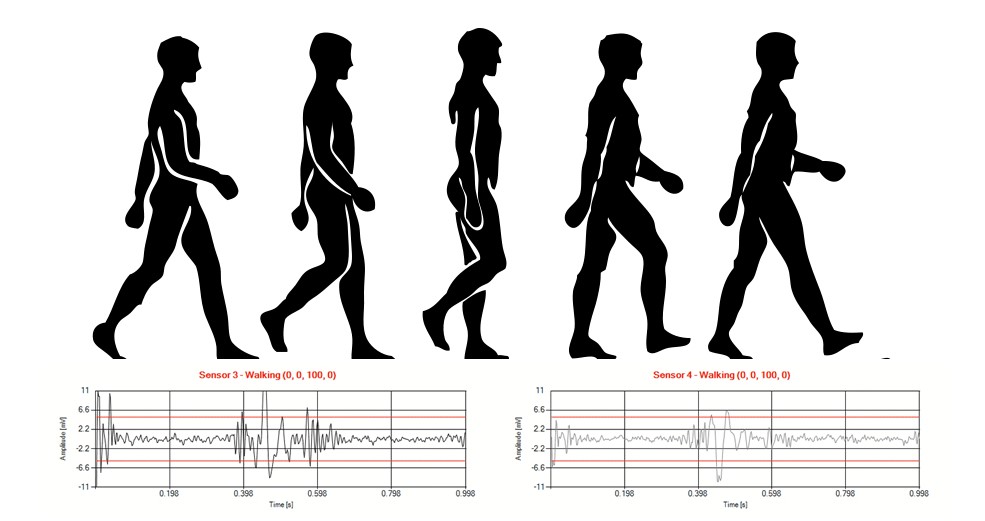
- Signature analysis. The analyzer compares the incoming waveform against the known seismic signatures of walking, running, digging and vehicle movement. A person’s gait is a repeating low-amplitude pattern; a vehicle is continuous and carries far more energy.
- Classification and alarm. When the pattern matches a real target the analyzer closes a dry-contact relay and reports which detector saw it, so the alarm tells you where along the buried line the movement is.
Rain, wind and traffic on a nearby road reach the sensors as well. They are rejected at the signature stage rather than by simply lowering sensitivity, which is what lets the system stay at a useful setting instead of being turned down until it stops alarming.
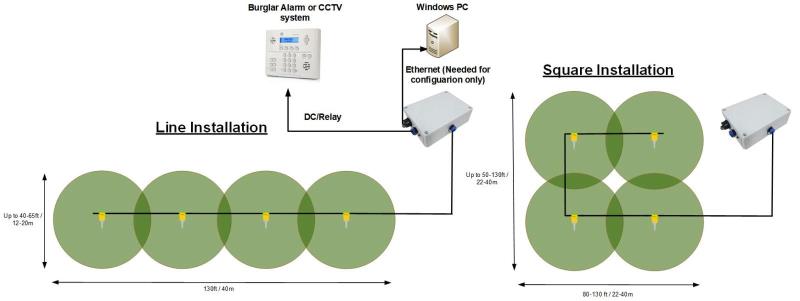
Seismo Sensor Layout:
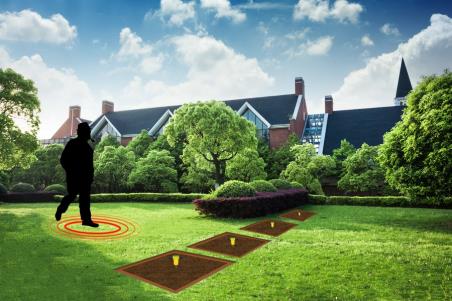
A Seismo system is supplied as four or eight detectors on one analyzer. They are buried either in a line along a route you want covered, or in a square around a fixed asset such as a generator, a wellhead, a tank or a cabin.
Spacing is typically 6 to 10 meters (20 to 32 ft) between detectors, which gives a protected run of roughly 80 m (250 ft) per system. Each detector covers a circle around itself, so a correctly spaced line has no gap between detectors and no blind corner. Where the run is longer, systems are chained.
The right spacing depends on the ground. Sand, clay, compacted gravel and frozen soil all carry vibration differently, so the spacing for a site is set by a survey and a live walk test, not by a figure taken off a datasheet.
Soluzioni innovative per ogni esigenza
Rilevamento perimetrale progettato su misura per i settori in cui un'intrusione costa di più.
Scopri come RBtec si adatta al tuo:


Sicurezza militare e di frontiera
Sicurezza militare e di frontiera
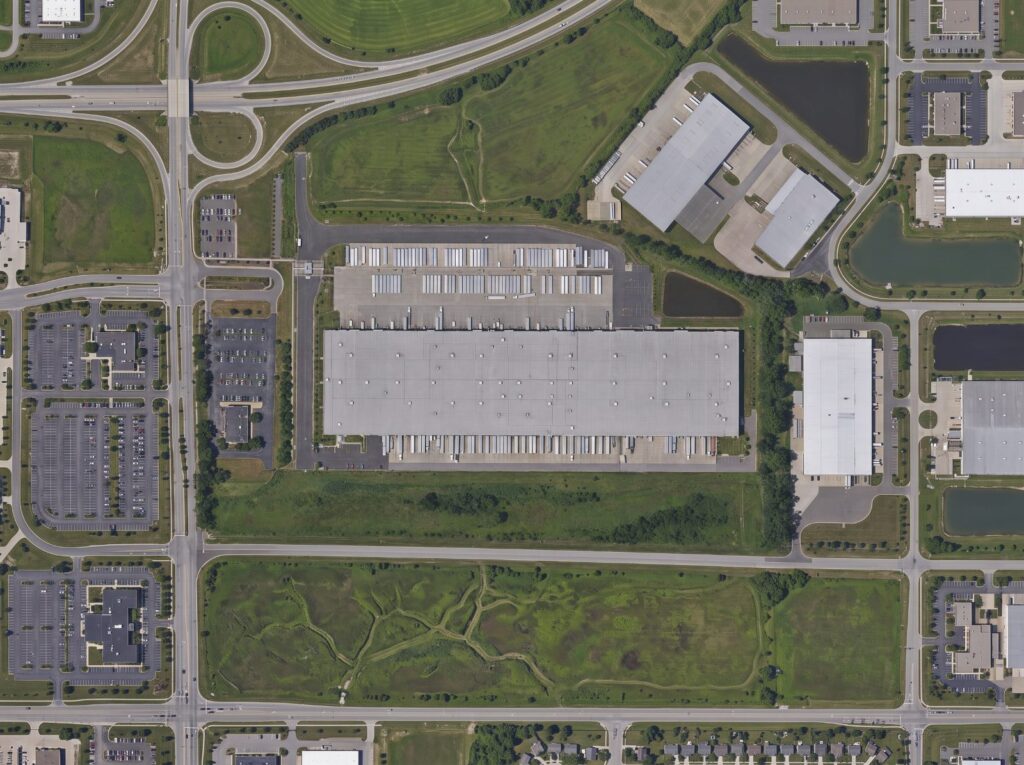
Centri di Logistica e Distribuzione
Centri di Logistica e Distribuzione
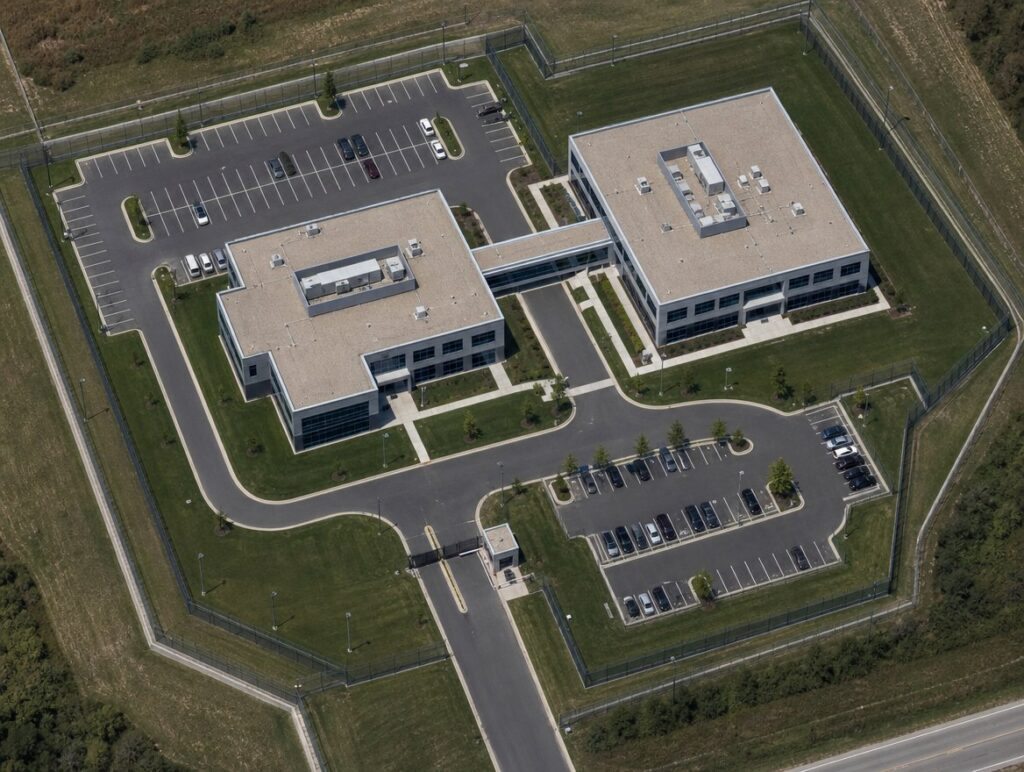
Here are five reasons a fence line alone will not protect open ground
Approach roads, tree lines, riverbanks and open desert have no structure to carry a fence sensor. A buried detector does not need one.
A camera mast or a fence sensor tells an intruder exactly what to defeat and where. A sensor underground gives them nothing to plan against.
Fog, dust, glare and darkness all cost a camera range. Vibration traveling through the ground is unaffected by the weather above it.
Fuel tanks, wellheads, pump houses and equipment yards sit well inside the perimeter. Seismo rings the asset itself, not just the boundary.
Construction compounds, remote camps and seasonal operations rarely justify a fence. Detectors can be lifted and reburied at the next site.
Unique features of the Seismo ground sensor system
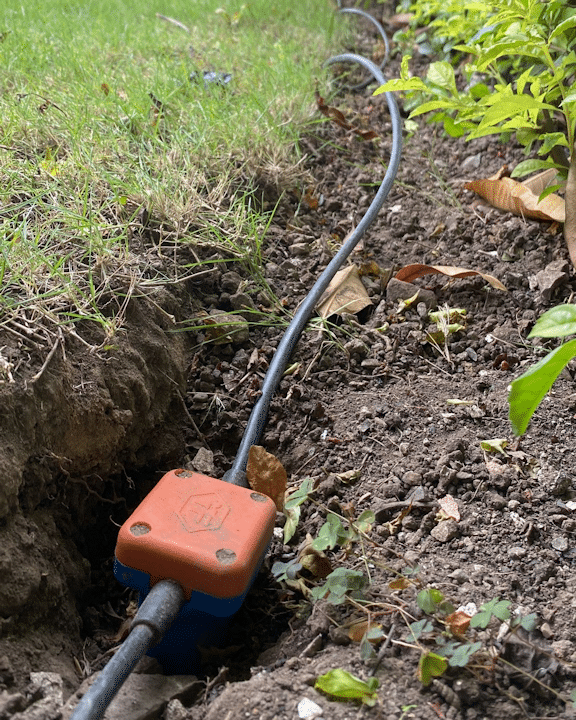
- Nothing above ground. Detectors, cable and connections are all buried. There is no post, no bracket and no visible cable run, so the protected line cannot be identified, photographed or simply walked around.
- Classification, not just detection. The analyzer separates a person from a vehicle, and both from environmental noise, before it raises an alarm — and it reports which detector triggered, so the alarm carries a location.
- Built to stay in the ground. The detectors are IP68 sealed for permanent burial and rated from −30°C to +70°C (−22°F to +158°F). Once they are in, there is nothing to service.
- Low power, easy to feed. 12–48VDC, drawing around 500mA at 12V. A modest solar panel and battery will carry a system at a remote site with no mains supply.
- Talks to what you already own. Alarms come out on dry-contact relays, normally open or normally closed, so the system drops straight into an existing alarm panel, DVR, VMS or SCADA. A wireless link is available where trenching back to the head end is impractical.
- Standalone or layered. Seismo runs on its own at a small site, or as the buried layer beneath a fence sensor and camera system at a large one — giving early warning while an intruder is still on the approach, before they reach the fence.
- Tuned to the soil it sits in. Sensitivity is set in software against live walk tests on the actual ground, so the system is calibrated to that site rather than to a generic default.