















Scarica lo studio di caso (PDF)
A major international airport hub in Latin America protected more than 20 km (12.4 miles) of perimeter fence with RaySense, RBtec’s fiber optic detection system: a single fence-mounted sensor cable run from one unit, locating events to within a few meters and cueing cameras through Genetec Security Center, installed by local crews under RBtec supervision in a few weeks without disrupting flight or cargo operations. Customer identity withheld at the client’s request.
Che tipo di sito veniva protetto?
The customer is a major international airport hub in Latin America, a primary regional gateway handling high-volume passenger traffic and time-sensitive air cargo. Aviation security standards set by ICAO make perimeter control a condition of operating, and the airport’s security program is audited against them.
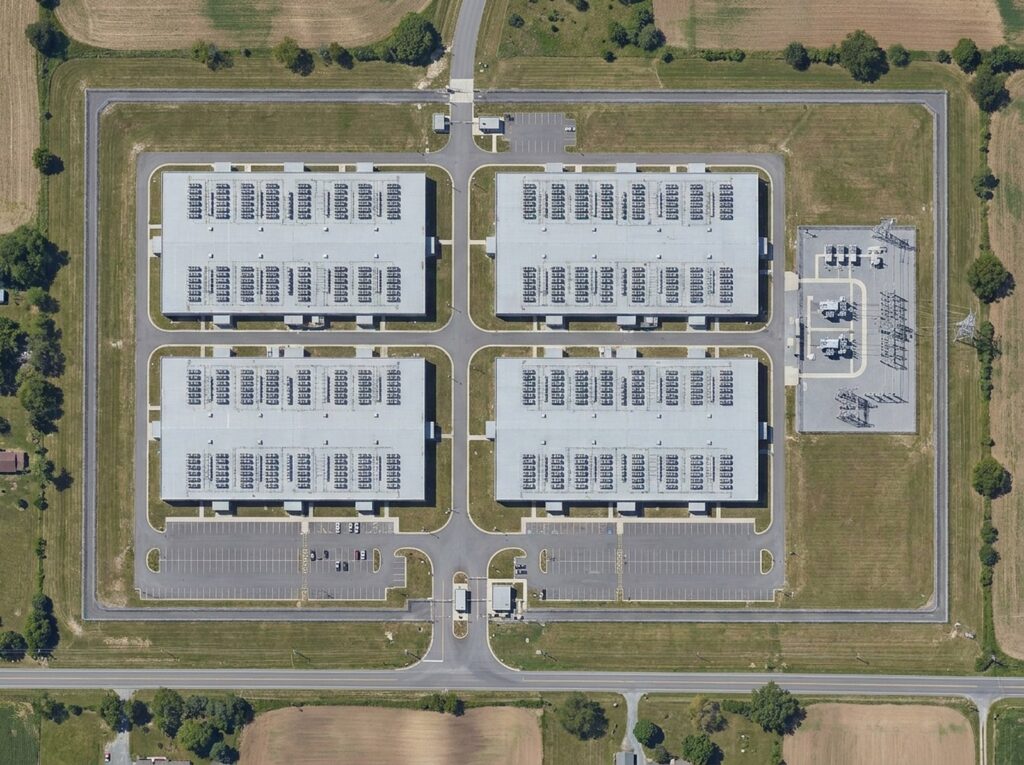
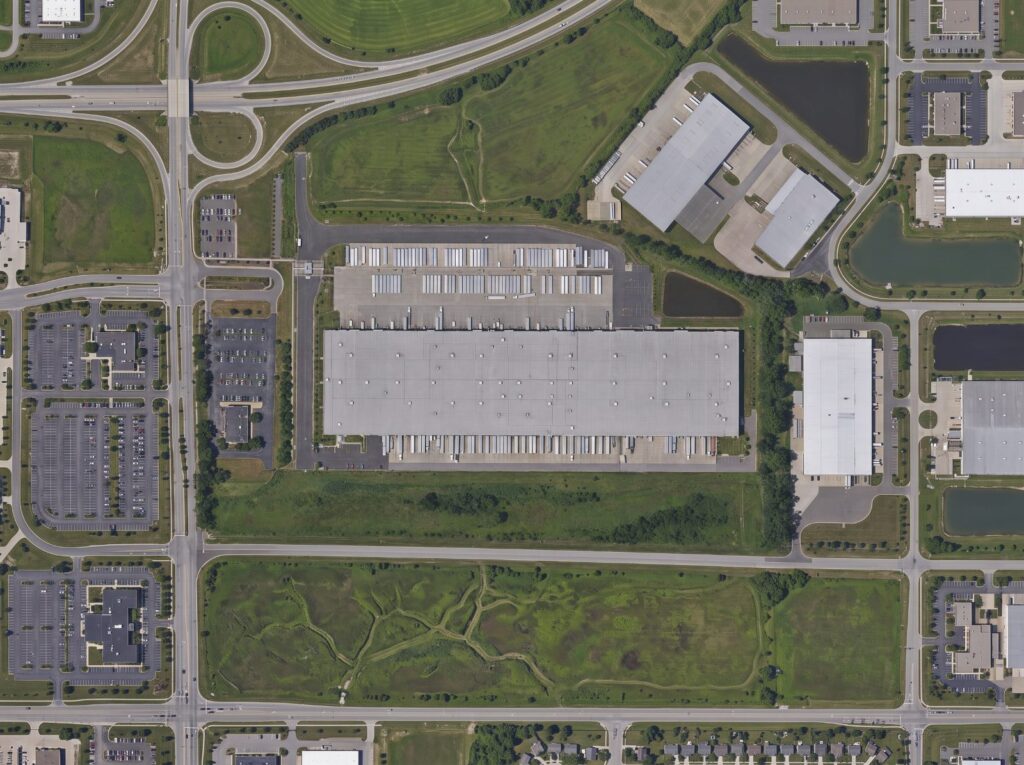
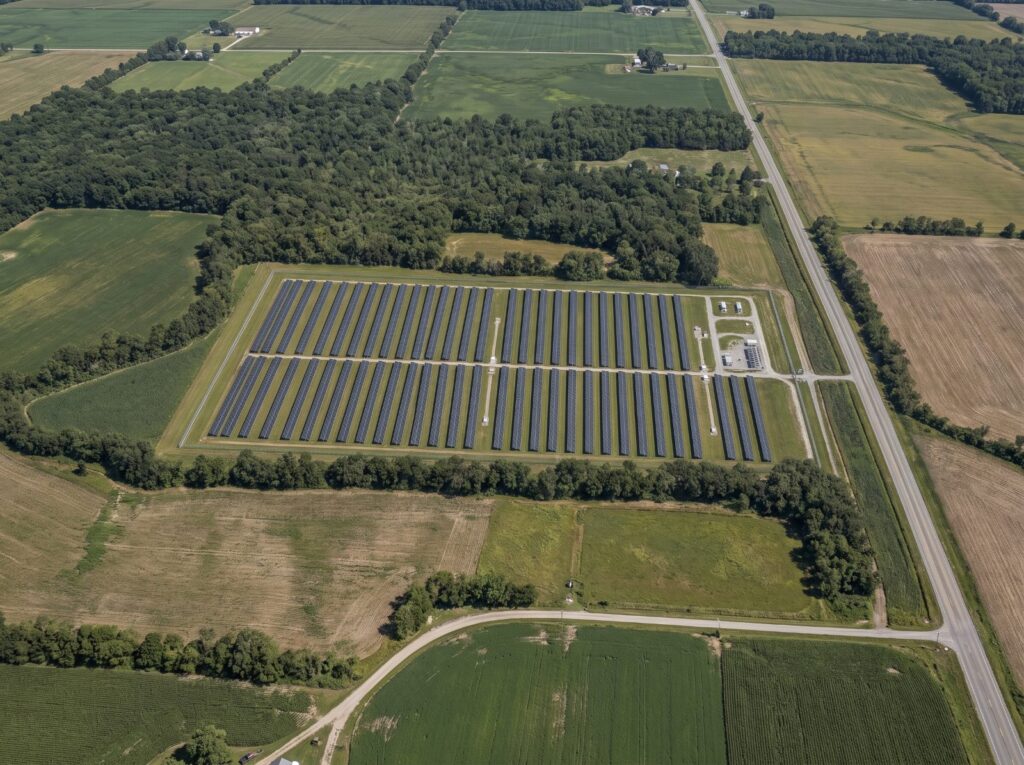
The perimeter itself runs more than 20 km (12.4 miles). It encloses runways, taxiways, aprons, fuel storage and cargo terminals, and much of it crosses ground far from any building: remote runway edges where the fence line is out of sight of the terminal complex for kilometers at a stretch.
What was the problem at the fence line?
The security team faced three problems that reinforce each other at this scale.
The first is distance. A 20 km fence cannot be watched by people. Patrols pass a given point a few times a day, and fixed cameras cover the fence near buildings and gates, not the long empty stretches between them.
The second is what the airport is protecting against. Remote fence sections are the natural entry point for cargo theft crews and for anyone with worse intentions, and aviation regulators expect airports to detect intrusions rather than discover them afterwards.
The third is noise. An airport fence lives in constant vibration: jet blast, ground support equipment, wind loading across open ground. A detection technology that cannot separate that background from a person cutting or climbing the fence will bury a control room in nuisance alarms until the operators stop trusting it.
Why not conventional sensors?
Point-style vibration sensors are designed around zones of a few hundred meters, each zone needing a processor with power and communications. Scaling that architecture across 20 km means dozens of powered enclosures along remote fence line, every one of them a maintenance visit and a possible failure point a long drive from the workshop.
Line-of-sight technologies such as microwave links and infrared beams bring their own constraints: they depend on flat terrain and precise alignment, and coverage gaps appear wherever the ground rolls or the fence turns. Documented weaknesses of beam-based sensing include nuisance alarms from birds and small animals and degraded performance in fog, rain and dust.
For a perimeter this long, the airport needed sensing that is continuous along the whole fence, unpowered in the field, and precise about location.
Cosa è stato installato?
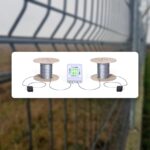
The airport installed RaySense, RBtec’s AI-driven distributed acoustic sensing (DAS) system. A standard optical fiber cable is mounted on the fence fabric and becomes the sensor along its entire length: the RaySense unit sends laser pulses down the glass and reads the backscatter, turning the whole cable into a continuous line of listening points.
The full perimeter runs on a single RaySense unit. The platform supports up to 50 km of fence in one direction and 100 km in total per unit, so a 20 km fence line sits comfortably inside one unit’s range with headroom for expansion.
When the fiber picks up a disturbance, the unit classifies its signature and places it on the fence to within approximately 3 m. The cable in the field is passive glass: no electronics, no power and no communications equipment anywhere along the fence line, and nothing for lightning or weather to take out between the fence and the equipment room.
Come è stato implementato il sistema?
Local crews carried out the installation with RBtec supervising the design and the commissioning. The work took a few weeks: the fiber is clipped to the fence fabric kilometer by kilometer, spliced and terminated at the equipment room, and then tuned.
Flight and cargo operations continued as normal throughout. Fence-mounted fiber needs no trenching and no power distribution along the perimeter, so the airside work reduced to controlled access along the fence line itself.
Commissioning is where the airport’s acoustic environment is handled. The classifier is tuned against the site’s own noise floor, jet movements, ground equipment and wind included, section by section along the cable, with the aim of keeping nuisance alarms low enough that operators keep trusting the system.
A cosa si connette il sistema?
RaySense feeds the airport’s Genetec Security Center platform. An alarm arrives with its location on the fence, and the VMS uses that location to call up the nearest cameras, so the operator’s screen shows the stretch of fence in question while the event is still in progress.
That pairing is the operational answer to a 20 km perimeter: the fiber says something is happening and where, and the video says what it is. The response team is dispatched to a point, not to a section of airfield.
Cosa è cambiato dopo l'installazione?
The design intent is that a cut or climb attempt anywhere on the perimeter, including stretches no camera or patrol was covering, raises a located alarm in the security operations center while it is happening. RBtec has not published measured before and after alarm or incident counts for this airport.
The deployment also gives the airport something its auditors can inspect: continuous detection coverage across the full perimeter, documented and testable, in line with the ICAO-driven security program the site operates under.
An airport is a location problem. On a 20 kilometer fence an alarm is only useful if it says where. The fiber gives the operator a point a few meters wide, and the VMS turns that point into the nearest camera. Alarm, location, picture: that is the whole design.
Il team di ingegneri RBtec
Cosa è stato distribuito
| Sistema | RaySense AI DAS Fiber Optic Perimeter Detection |
|---|---|
| Customer | International airport hub, Latin America |
| Perimetro | More than 20 km (12.4 miles) |
| Sensor | Single fiber optic cable, fence-mounted along the perimeter |
| Processing unit | One RaySense unit, rated up to 50 km one direction, 100 km total |
| Location precision | Approximately 3 m location class on chain-link fence |
| Field electronics | None, passive optical cable only along the fence line |
| Integrazione | Genetec Security Center, camera call-up to the located point |
| Installazione | Local crews with RBtec supervision, a few weeks, operations uninterrupted |
| Compliance context | ICAO-driven airport security program |
Scarica lo studio di caso (PDF)
Qual è il prossimo passo?
For an airport, or any site whose perimeter is measured in kilometers, the first two questions are total fence length and where the equipment room sits, because the cable route and the unit count both follow from them. Send RBtec a perimeter drawing and we will return a cable route, a unit count and an integration plan for your VMS.
Dal 1986, RBtec Perimeter Security Systems progetta sistemi di rilevamento delle intrusioni perimetrali da esterno, con oltre 5.000 impianti installati in 57 paesi.
 RaySense AI DAS: one unit sensing along a single fence-mounted fiber optic cable.
 Continuous detection along the full perimeter, including stretches cameras never covered.