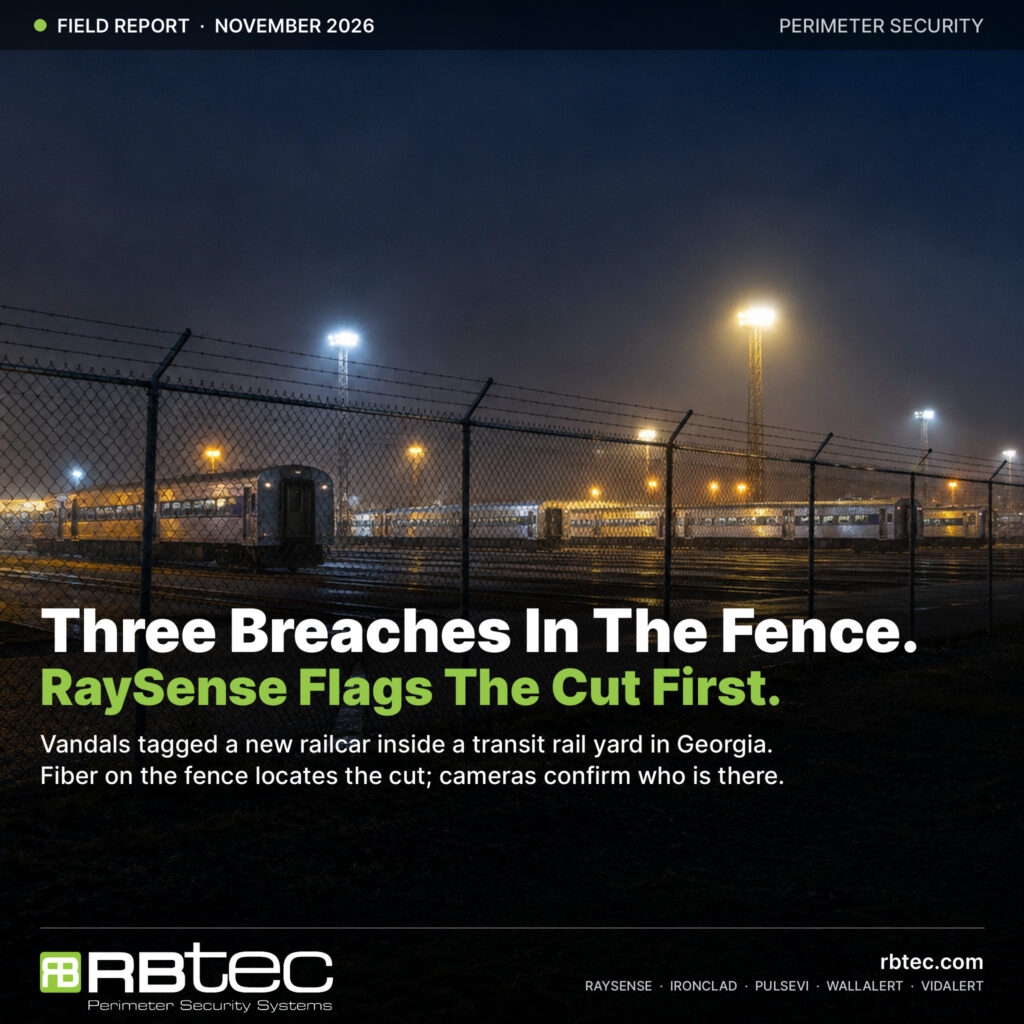















A chain-link fence around a vehicle holding lot assumes a locked gate and a visible boundary make the next lot the easier target. Most nights that holds. The night it does not, the fence has no way to say so.
What Actually Happened
At approximately 3:59 a.m. on Friday, September 18, 2026, Boston Police officers assigned to District C-11 responded to a radio call reporting a disturbance in the area of 150 Freeport Street in Dorchester, the address of Peter’s Towing. While the officers were still on the way, BPD Operations passed along more detail: a group of males was cutting through the fencing at the location and taking motorcycles that were inside the tow lot.
On arrival, officers were directed to an individual running out of the lot and apprehended him nearby on Clayton Street. Others were told a second male had jumped over the fence and gone back toward the rear of the lot when the cruisers pulled up. A search found him hiding underneath a truck. Three stolen motorcycles were recovered outside a Clayton Street address and returned to the lot. Two suspects were arrested on charges including breaking and entering at night for a felony, larceny of a motor vehicle, and trespassing.
By any fair reading this is a good outcome. What is worth studying is not the response but the order of events that made it necessary.
The Detection Gap
Reconstruct the sequence from the fence outward. The fabric was cut. People came through the opening. At least one more came over the top. Motorcycles were rolled out and staged in the open a block away. Only then did the situation generate a call, and that call was a disturbance report, not a perimeter report.
Every one of those steps happened at a boundary designed to be the first thing an intruder touches. The fence was touched first and reported last.
This is not an argument against cameras. Video is what tells an owner, and later a court, exactly what happened and where people went, and camera analytics can flag motion at a fence line when conditions allow. Those conditions are real, though: sight line down the fence run, lighting at four in the morning, weather, distance to the fabric, mounting height, and regular tuning. On an urban lot packed with stacked vehicles, the view along the fence is exactly the view that parked trucks and trailers interrupt.
That is the gap. Detection at the physical layer and verification through video are two different jobs, and a site with only the second one is waiting on somebody outside to notice.
How IRONCLAD Addresses This
IRONCLAD is a fence-mounted sensor system. The sensor cable is fastened along the chain-link fabric itself, reads the mechanical signature of what happens to that fabric, and reports by zone rather than as one site-wide alarm.
Apply that to this lot. When the first links were severed at 3:59 a.m., the cut is a distinct mechanical event in the fabric, and separating it from wind, traffic vibration and rain is the job IRONCLAD is built for. The alarm is available at the cut, before anyone steps through the opening. The second man going over the fence loads the fabric with his body weight on the way up, which is a second signature on a second zone.
In practice that means an alert naming a specific fence run while three motorcycles are still inside the lot, not after they are staged on a street a block away. It also gives the camera covering that run a reason to be looked at, which is where Vidalert earns its place. Alert first, verify second, dispatch on something confirmed.
No sensor guarantees detection, and no honest vendor promises zero nuisance alarms. What a properly installed and tuned fence sensor changes is who gets told first, and how early.
What Facility Owners Should Ask
Ask what specifically generates your first alert at 3 a.m. If the answer is a patrol pass, a neighbor or a passing motorist, that is the finding. Ask whether the alert names a location or only says something happened. Ask whether the fence line is covered continuously or only where a camera’s sight line reaches. Then ask what a cut, as opposed to a gate opening, would have to do before your system called it.
The Bottom Line
The Dorchester lot got a good ending because people outside the fence noticed and officers moved quickly. That is not a system. It is a night that went well. A fence that reports its own cut moves the first alert from outside the property to the boundary itself, which is the only place it can arrive early enough to matter.
If you want to walk your own fence line against that question, get in touch.