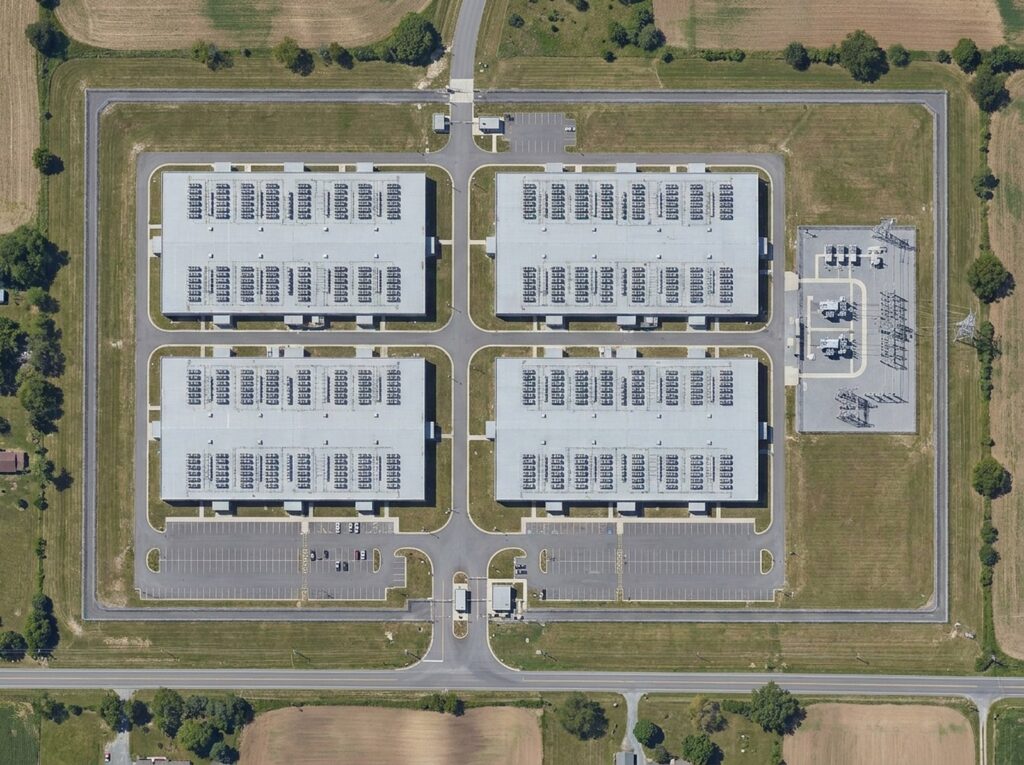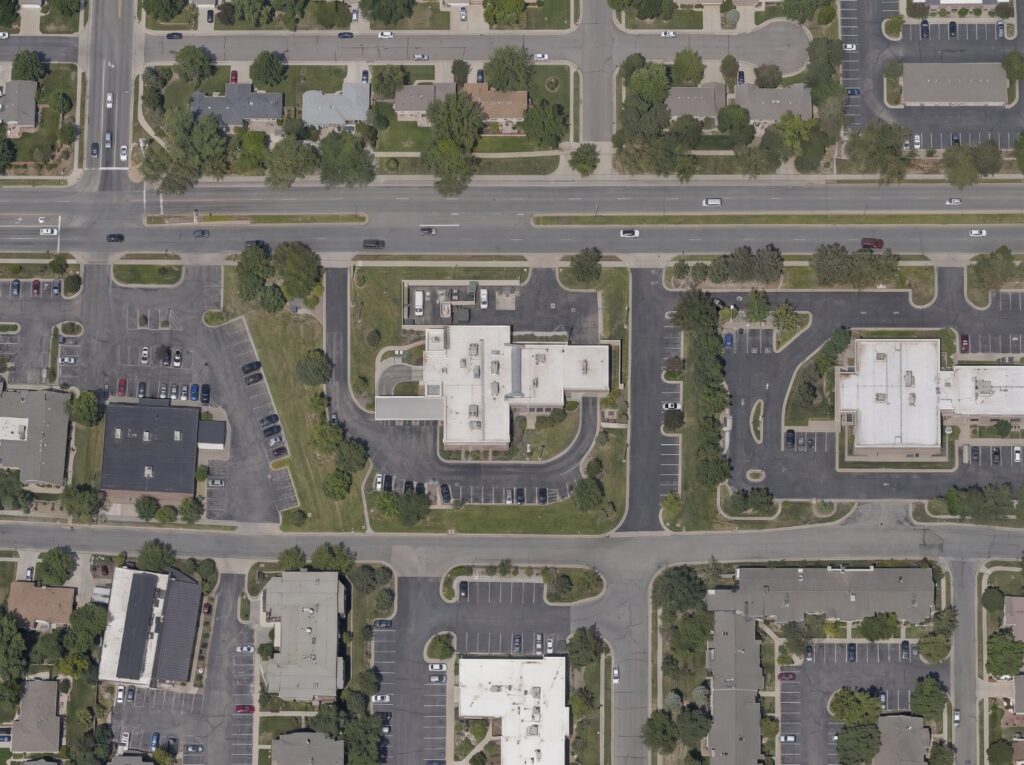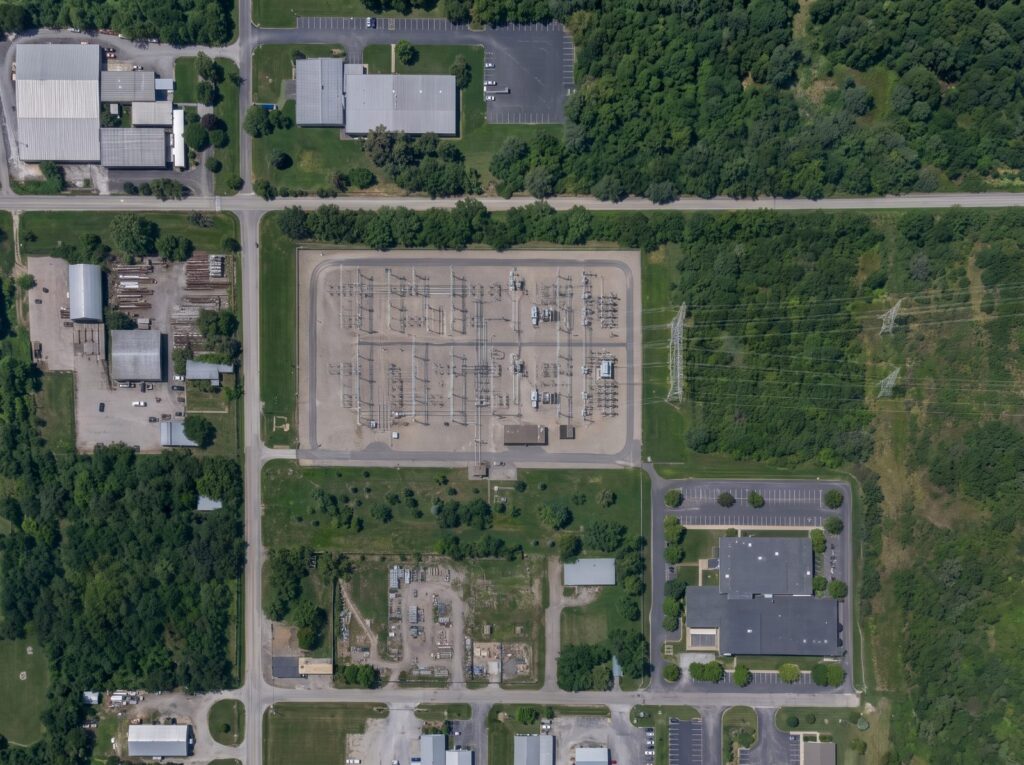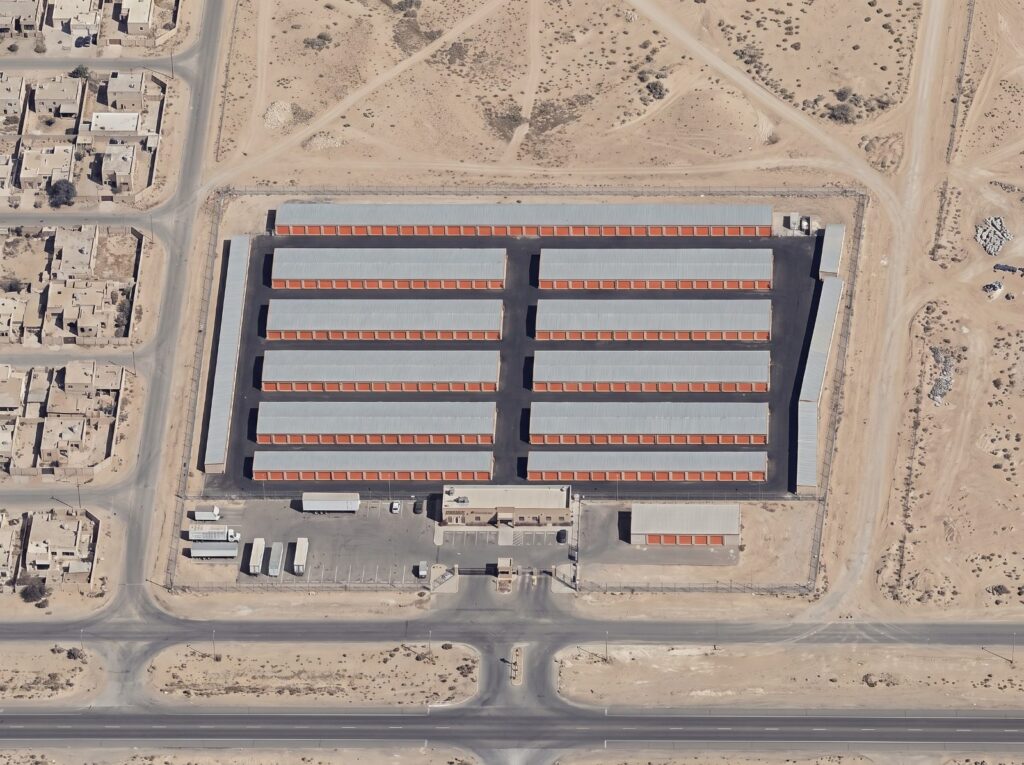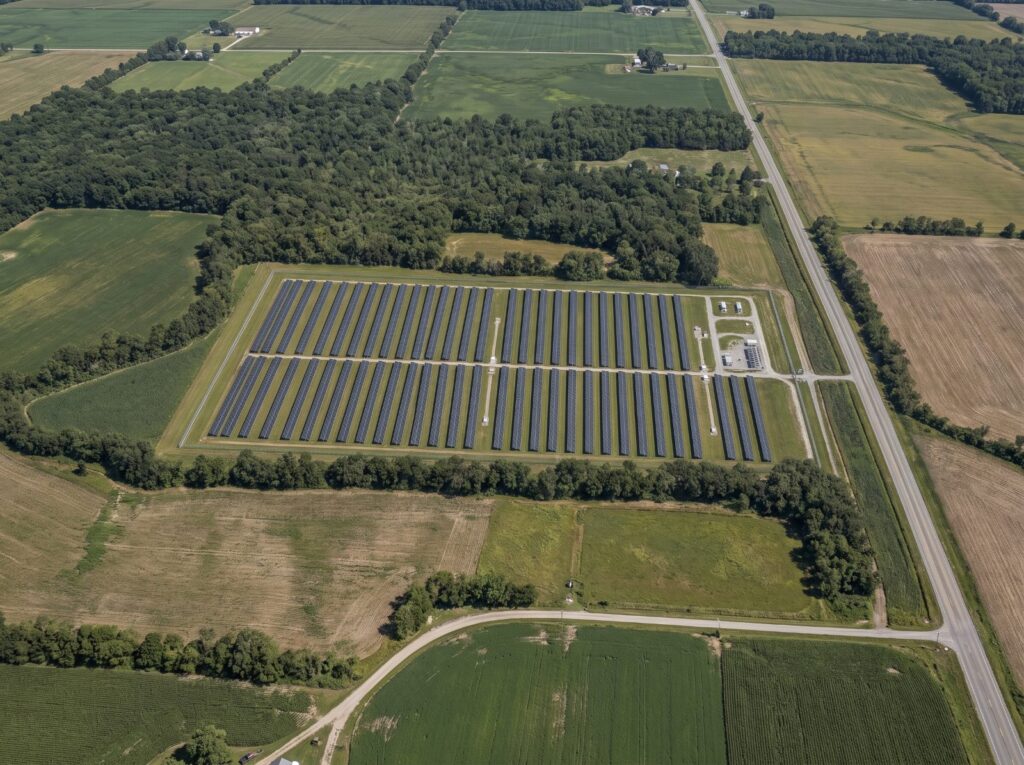
















A distribution and fulfillment center hardened its 4,000 ft (1,200 m) perimeter with the IRONCLAD Fence Alarm System after repeated cargo theft attempts at the fence line. Four zones on two processors, installed by a security integrator in a few days without interrupting 24/7 yard operations, feeding Milestone XProtect so cameras turn to the alarmed zone automatically. Customer identity withheld at the client’s request.
What kind of site was being protected?
The customer operates a high-volume distribution and fulfillment center: a large warehouse ringed by loading docks, a trailer yard holding loaded and staged trailers, and truck lanes that run around the clock.
The perimeter is approximately 4,000 ft (1,200 m) of chain-link fence. Inside it sits exactly what organized cargo crime targets: loaded trailers waiting for dispatch, staged pallets at the docks, and high-value goods in predictable places at predictable times.
The site never stops. Trucks enter and leave through the night, dock doors cycle continuously, and any security measure that slowed the flow of outbound freight was ruled out from the start.
What was going wrong at the fence line?
The operator was dealing with cargo theft attempts at the fence itself: intruders cutting through the chain-link to reach the trailer yard and staged freight, rather than coming through the gate.
That pattern is the hard one for conventional security. The gatehouse checks who drives in. Cameras record the yard. But a cut fence at the back of a 4,000 ft perimeter, at night, between patrol passes, gives an intruder minutes alone with loaded trailers before anyone is looking.
Each incident carried more than the value of what was taken: damaged fencing to repair, disrupted dispatch schedules, and claims paperwork for freight the operator was contractually responsible for.
Why were cameras and patrols not enough?
Both were already in place, and both are reactive. A camera records a theft that is already happening, and on a perimeter this size most camera views are of empty fence for hours at a time, which is exactly the footage nobody watches live. A patrol covers one point of the perimeter at a time.
The missing piece was detection at the boundary: something that reports the moment the fence is cut or climbed, and says where along 4,000 ft it happened, so the response starts while the intruder is still at the fence.
What was installed?
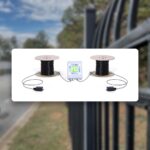
RBtec supplied the IRONCLAD Fence Alarm System, a sensor cable mounted on the existing chain-link fence that detects the vibration signature of cutting, climbing and lifting at the fence fabric itself.
The deciding factor for a logistics site was noise discrimination. A distribution yard is one of the loudest vibration environments a fence sensor can operate in: heavy trucks passing within feet of the fence, dock machinery, and wind loading on long open runs. The system had to separate all of that from a person cutting the fence, or it would drown the operators in alerts and be ignored.
How was the system deployed?
The 4,000 ft perimeter was divided into four zones of approximately 1,000 ft (305 m), running on two LPU-402 processors with two zones each. Four zones means an alarm points the response to the right quarter of the perimeter rather than to the site in general.
A security integrator carried out the installation over a few days. The yard kept operating throughout: no gate closures, no suspended dock operations, no interruption to outbound freight. The sensor cable mounts to the existing fence as a single run, so there was no trenching and no new fence construction.
Commissioning is where a logistics site differs from a quiet one. Each zone was tuned to its own environment: the zone along the truck lane is set differently from the zone along the rear tree line, so heavy vehicle vibration in one place does not force reduced sensitivity everywhere. The processors sit in NEMA 4X, IP66 rated enclosures at the fence line.
What does the system connect to?
Alarms feed the site’s existing Milestone XProtect video management system. When a zone alarms, XProtect calls up the cameras covering that zone, so the operator sees the alarmed stretch of fence at the moment of the event instead of scrubbing footage afterwards.
This is the combination that makes a large perimeter workable: the sensor cable says something is happening and where, and the VMS puts eyes on it immediately. The guard force responds to a verified event at a known location, not to a bare siren.
Nothing new was added at the monitoring end. The site kept its XProtect installation, its cameras and its operating procedures; the fence became another input into a system the operators already used every shift.
What changed after installation?
The design intent is that detection now happens at the fence, before an intruder reaches the trailer yard or the docks, and that per-zone tuning keeps routine yard noise from reaching an operator as an alert. RBtec has not published measured before and after incident or alarm counts for this site.
Because the configuration is standard hardware in a standard pattern, the same design extends to other facilities in the operator’s network without re-engineering: count the fence length, divide by zone length, add processors.
On a logistics yard the tuning is the job. A truck passing three feet from the fence puts more energy into it than a person climbing it, so we set each zone to its own surroundings. The zone by the truck lane and the zone on the back line should never share one sensitivity setting.
RBtec engineering team
What was deployed
| System | IRONCLAD Fence Alarm System |
|---|---|
| Perimeter | Approximately 4,000 ft (1,200 m) |
| Zones | Four zones of approximately 1,000 ft (305 m) |
| Processors | Two LPU-402 units, two zones each |
| Fence coverage | Single cable run per fence line, fences up to 10 ft (3 m) |
| Noise handling | Per-zone tuning against heavy truck and loading dock vibration |
| Enclosure | NEMA 4X, IP66 |
| Integration | Milestone XProtect VMS, camera call-up to the alarmed zone |
| Installation | Security integrator, a few days, yard operations uninterrupted |
| Warranty | 2 years |
What is the next step?
If you operate a distribution center with a fenced yard, the two numbers that shape the design are total fence length and how many distinct noise environments the perimeter passes through: truck lanes, dock aprons, quiet rear lines. Send RBtec those two things and we will return a zone plan and processor count for the site.
RBtec Perimeter Security Systems has built outdoor perimeter intrusion detection since 1986, with more than 5,000 systems installed in 57 countries.
 IRONCLAD fence-mounted sensor cable across four zones of about 1,000 ft each, on two LPU-402 processors.
 Covered sections of the logistics yard that previously had no detection at the fence line
 Zone-level alarm location, so guards respond to the right stretch of fence instead of sweeping the whole perimeter.
 An alarm raised at the fence line, before an intruder reaches the trailers and loading zones.
 A hardened perimeter layer the operator can demonstrate in security audits.