













Chile’s solar boom now carries a security price tag. Insurance Journal, citing Bloomberg reporting from May 7, described how organized crews are stripping panels and copper cables from remote photovoltaic plants and feeding the stolen equipment into international black markets. For facility owners, integrators, and utility security teams in Latin America and the United States, the playbook these crews are running is worth studying.
What actually happened
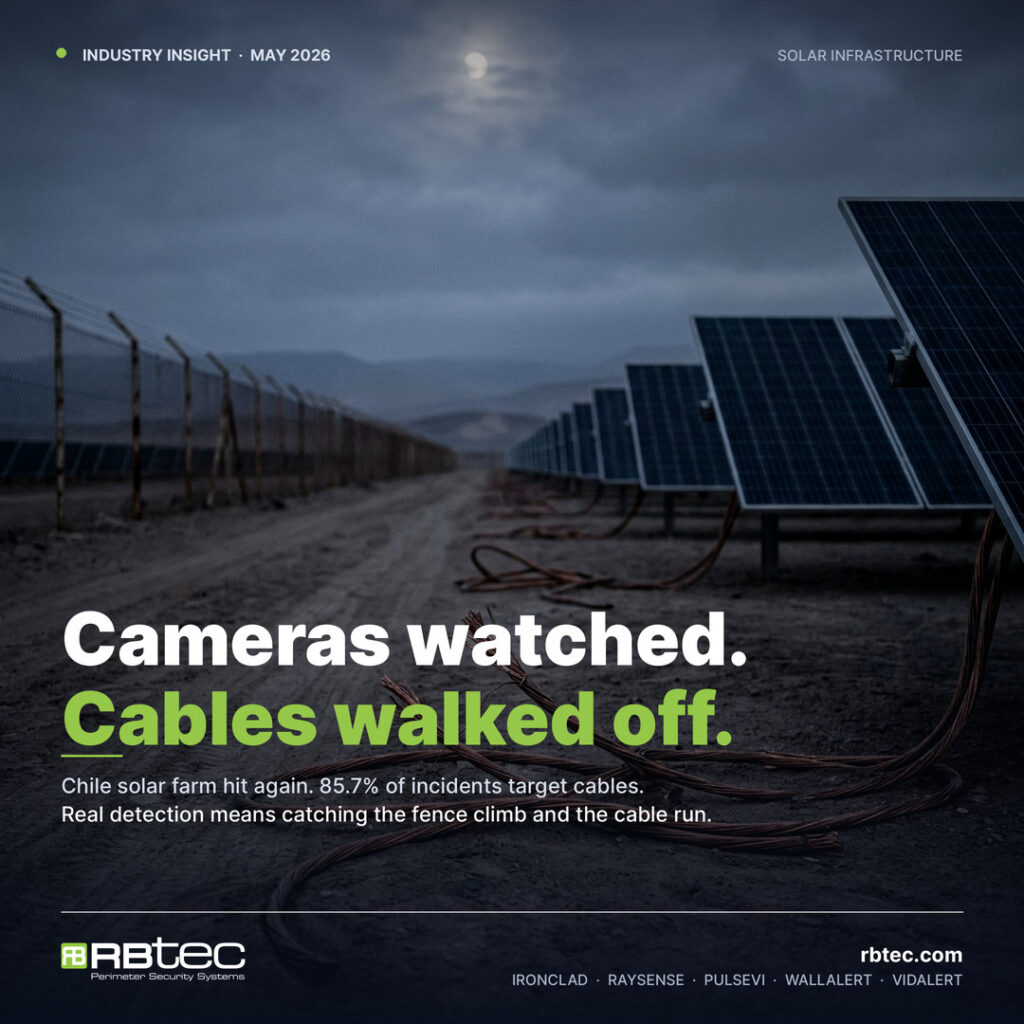
At Eléctrica Altos de Til Til, a solar farm north of Santiago that supplies the nearby San Pedro mineral processing plant, intruders broke in before dawn on February 24. They scaled an electric fence, disabled the security cameras, and made their way to the control room. From there they cut the copper cables that power the system, rolled them up, and carried them down an adjacent hillside on foot to terrain that vehicles could not reach. Some bundles were stashed in the brush for later retrieval.
That site is not an outlier. A service delivery manager who oversees more than 60 Chilean solar parks told Bloomberg his portfolio has recorded more than 30 thefts since March of last year. One site was hit five times in less than a month. Industry data from Chile’s Solar Energy Association (Acesol) shows cables account for 85.7% of stolen items, with panels at 54.8%. In April, Chilean authorities dismantled a single criminal network that had moved more than $900 million worth of stolen copper between 2020 and 2025.
The detection gap
The pattern in the reporting is the part security professionals should sit with. The intruders scaled an energized fence. They disabled the cameras before the cameras could do anything useful. They worked for less than an hour, knew exactly which components to target, and left through terrain a patrol vehicle could not follow.
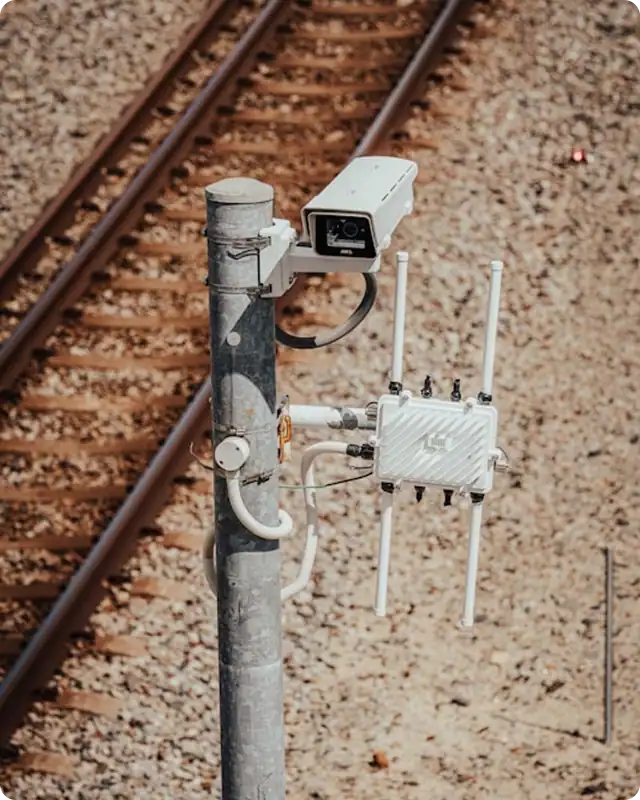
One renewable energy executive quoted in the Bloomberg piece put it bluntly: security cameras at these sites often seem to exist so victims can watch the theft unfold in real time. Video is documentation. It is not a tripwire. By the time a remote operator or arriving guard sees the feed, the copper is already in an unmarked truck and the site is offline for weeks of repair work.
The other detail worth noticing: cables, not panels, are the dominant target. Cable runs sit below grade or inside trenches between strings, junction boxes, and the substation. They are invisible to a perimeter camera even when the camera is working. A camera-and-fence-only design has no answer for an attacker who has already crossed the fence line and is digging up or cutting a buried conductor.
How a real detection layer addresses this
The lesson from incidents like Til Til is that remote energy sites need detection that fires the moment the intrusion starts, not a recording of it after the fact. The two physical attack surfaces are the fence line itself and the buried cable runs inside the perimeter. Both can be sensed.
A fence-mounted sensor like RBtec’s Protezione Perimetrale per Recinzioni IRONCLAD detects climb, cut, and lift attempts on the fence fabric in real time and reports the event to the control room and to integrated cameras before the attacker is on the ground. For the second layer, RBtec’s sistema di rilevamento delle intrusioni in fibra ottica interrato can sense digging, walking, and cable tampering along long underground runs, which is exactly the attack mode the Chile reporting documents.
Together, a fence sensor and a buried sensor turn perimeter security into something that fires while the event is happening, with location data accurate enough to send a guard or activate a deterrent at the right spot.
What facility owners should ask
If you operate a remote solar park, a substation, or any unmanned site with copper and electronic assets, three questions are worth running through with your integrator. First, what fires the first alert when someone crosses the fence line, and how fast does it fire? Second, if an intruder is already inside the perimeter and going after the cable runs, what catches that activity? Third, how is the detection layer tied to cameras and to a response, so that the alert produces a useful action and not just a clip to review later?
Insurance carriers are starting to ask the same questions in a different form. As the Bloomberg piece notes, insurers in Chile are tightening conditions and raising premiums for solar projects as theft losses pile up. A documented detection layer at the fence and in the ground is increasingly a condition of coverage, not a nice-to-have.
The bottom line
Til Til is what happens when a remote energy site relies on barriers and cameras alone. The fence slowed the intruders by seconds. The cameras recorded the loss. The cables were already gone. The fix is detection at the fence and in the ground, integrated with cameras and response. Source: Insurance Journal, May 7, 2026.