













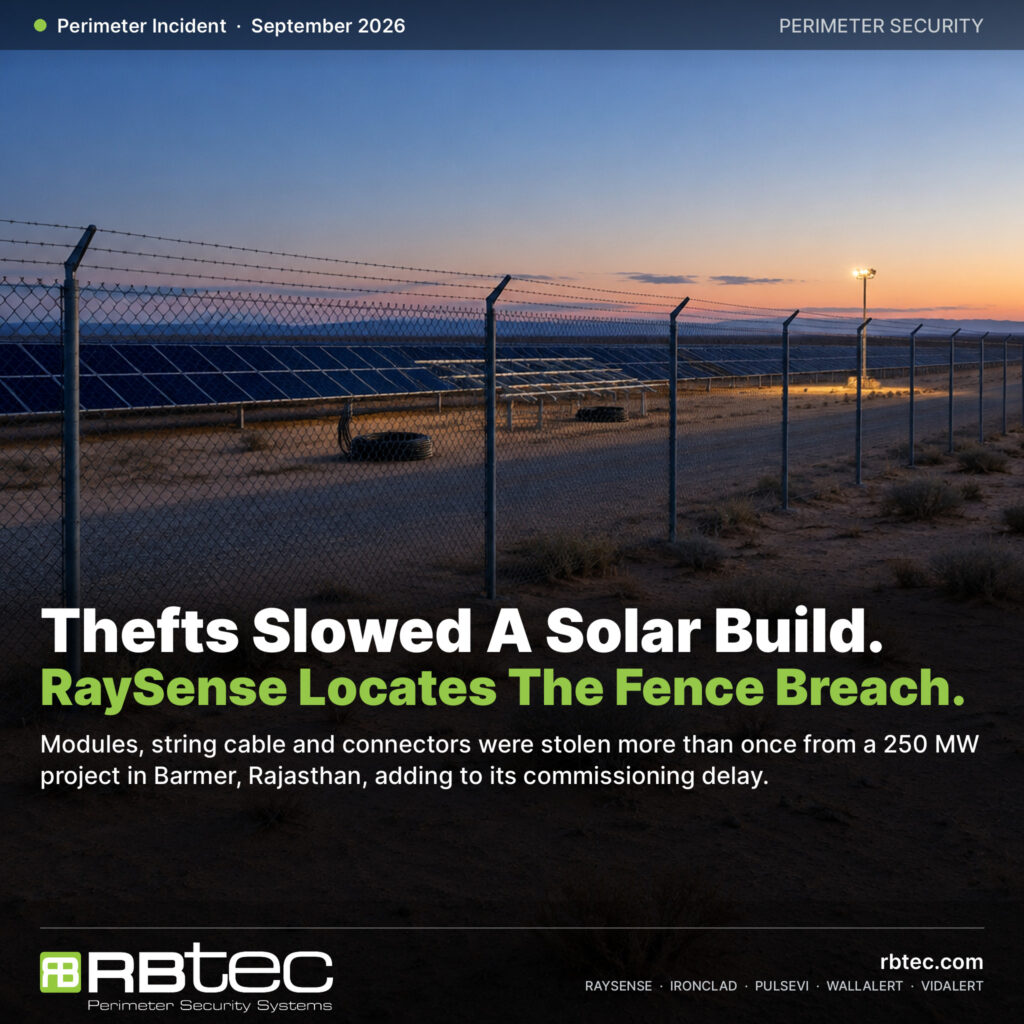
A regulatory order issued on September 25 lists theft among the reasons part of a 250 MW solar project in Barmer, Rajasthan, was not commissioned on time. The developer told the regulator that modules and electrical parts were stolen more than once, and that each loss had to be bought and installed again.
What Actually Happened
According to Saur Energy’s report on the Central Electricity Regulatory Commission (CERC) order, Khaba Renewable Energy said repeated thefts of solar modules, string cables, MC4 connectors and other electrical components disrupted installation work at its Barmer project. The company told CERC that it had to procure replacement equipment and reinstall it, and that this contributed to the commissioning delay.
Theft was one of several causes. The company also cited a storm on June 1, 2026, that damaged about 2,891 modules and 609 structural components, right-of-way and access-road obstructions, and an 11 kV line that had to be moved off the project land. By August, 200 MW of the project had been commissioned. On September 25, CERC granted a further 45 days of infirm-power injection for the remaining 38.1 MW.
The Detection Gap
The order, as reported, does not say how the thieves got in, when each theft was found, or what security the site had. It does show what repeated theft costs a project under construction: every stolen part is paid for and installed twice, and the schedule carries the difference.
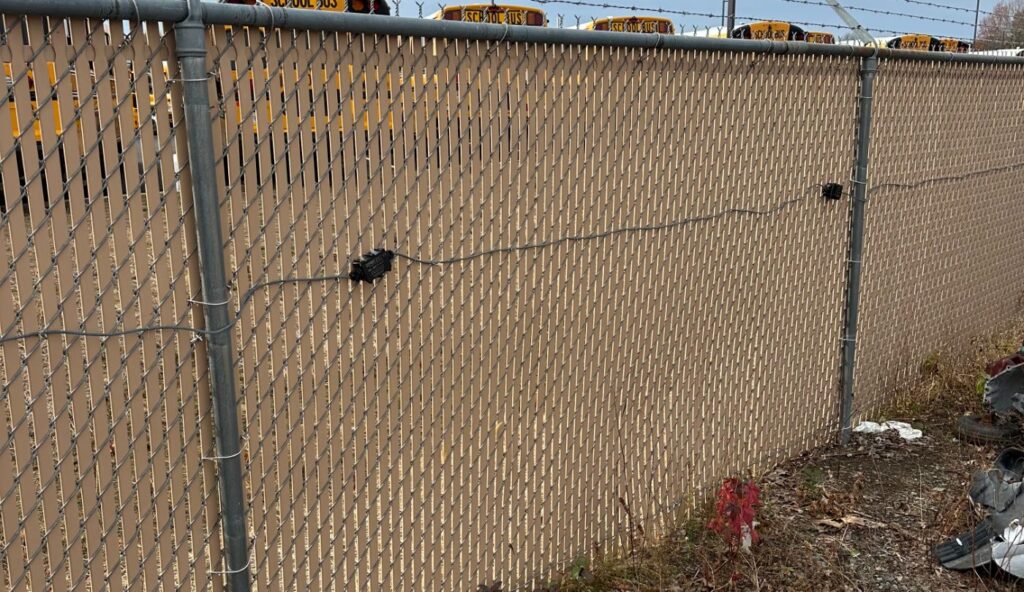
A utility-scale solar plant is a hard site to watch. It covers a large area with a long fence line, and during construction the material is spread across many blocks. A guard patrol sees the stretch of fence it is passing. Unless something reports the moment someone crosses the fence, a theft comes to light when somebody notices the missing equipment.
Cameras help an operator see who is at the fence and what they are carrying. Camera analytics can also flag movement, but they depend on line of sight, lighting, distance, weather and tuning, and a long fence line needs many cameras to see all of it.
How RaySense Addresses This
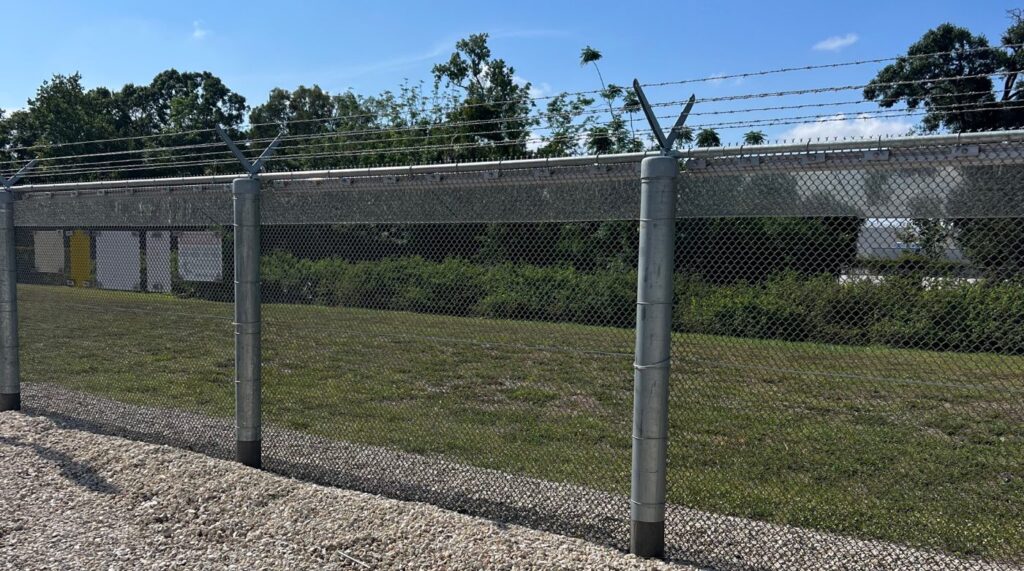
RaySense is a distributed acoustic sensing system that uses standard single-mode fiber, mounted on the fence fabric, as the sensor. The processor sends laser pulses down the fiber and reads vibration along its full length. Its AI engine separates cutting, climbing and lifting from wind, rain and traffic, and reports each alarm with a location, with a detection resolution of 3 m (10 ft). One processing unit covers up to 100 km of fiber.
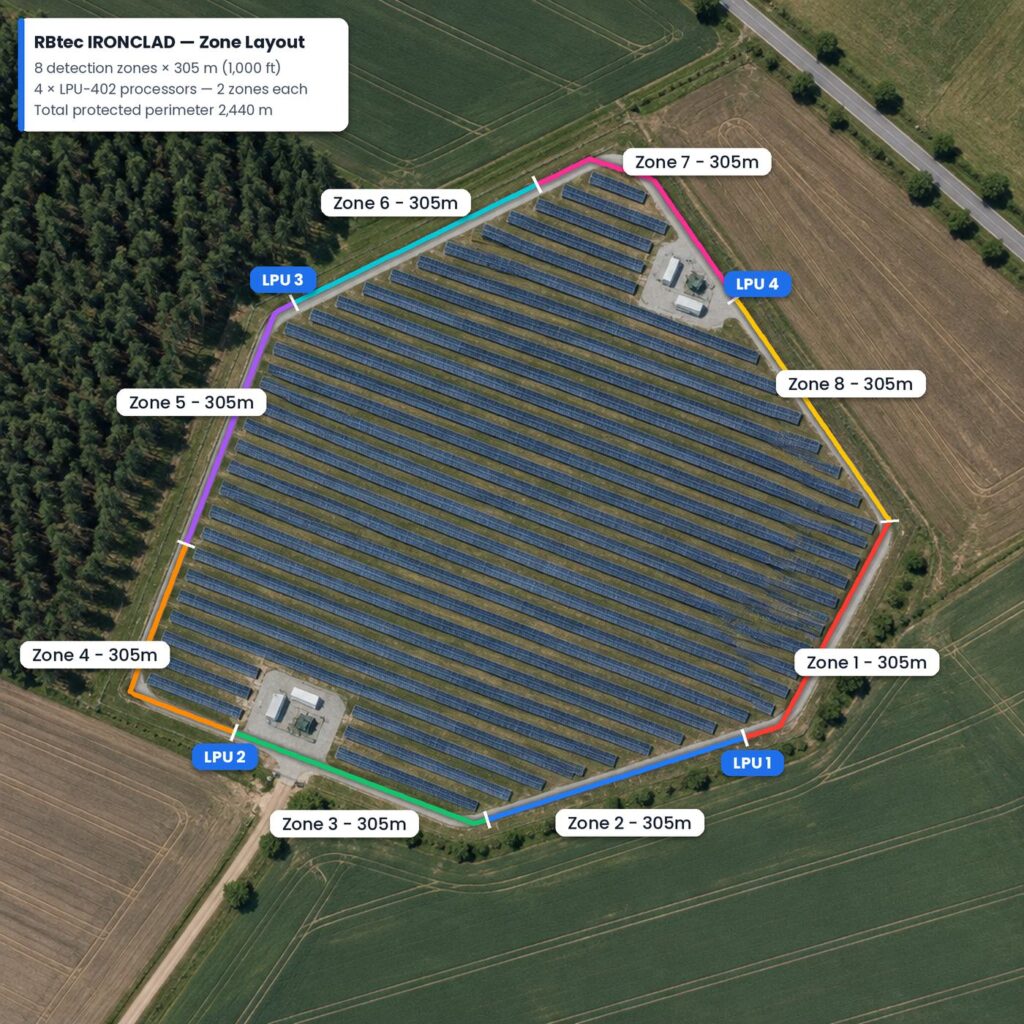
On a plant like the one in Barmer, fiber would run the full perimeter fence, divided into software zones. A crew cutting or climbing the fence to reach the arrays would set off an alarm in the zone where they crossed, while they were still at the fence, before modules were unbolted or string cable cut. Through a VMS or Vidalert, the alarm can call up the nearest camera, so an operator confirms what is there and sends a guard to that section.
Solar plants suit passive fiber. The sensing cable carries only light, so there is no power, grounding or electronics along the fence, and the processing unit sits indoors. RBtec covers the wider design for these sites on its solar farm security page.
Fence-mounted RaySense detects activity on the fence. It does not detect someone who enters through an open gate or who is already inside. A hole left unrepaired from an earlier night becomes a maintenance gap. Open ground inside the fence needs its own buried or volumetric layer, and a site still using temporary fencing needs its layout planned around that stage of construction.
What Facility Owners Should Ask
If our fence were cut tonight on the far side of the site, what would tell us, and how fast?
Would that alert say which section of fence was crossed, or only that something happened?
Does a fence alarm bring up our cameras, or do we review footage after material goes missing?
How is material protected during construction, before the permanent security system is live?
The Bottom Line
Khaba Renewable’s order lists theft alongside a storm and land-access problems. Of those, theft is the one that starts with someone crossing a fence, and a fence with fiber on it reports where that happened. To plan fence detection for a large solar site, contact RBtec.